
In this guide
Choosing a copper pipe fitting becomes much simpler when you match the way the joint works to the conditions of the job. Compression, end feed, solder ring, copper push-fit and copper press fittings each connect pipe differently. The appropriate choice depends on the pipework, service, fitting size, site conditions, available tools and the competence of the person carrying out the work.
Use these distinctions to narrow the options, then confirm the exact fitting against its manufacturer's current technical information. A familiar fitting type, convenient installation method or attractive price cannot establish compatibility or suitability on its own.
Begin with the job
Start by defining what the connection needs to do and where it will be installed. Domestic, commercial and industrial settings provide useful context, but the label alone does not prove that a fitting is right for the service or operating conditions.
Confirm that the pipe, fitting and any supporting components are designed to work together.
Check that the required fitting shape and size are available in the selected system.
Consider the service and operating conditions stated in the manufacturer's technical information.
Account for access, whether heat is permitted and whether the work area may be wet.
Match the method to the available tools and the installer's competence.
Decide whether potential demountability or the visible finish matters for the job.
Compression fittings
A compression fitting makes a mechanical joint with three main parts: a compression nut, an olive and the fitting body or seat. Tightening the nut compresses the olive against the pipe and fitting body to form the seal.
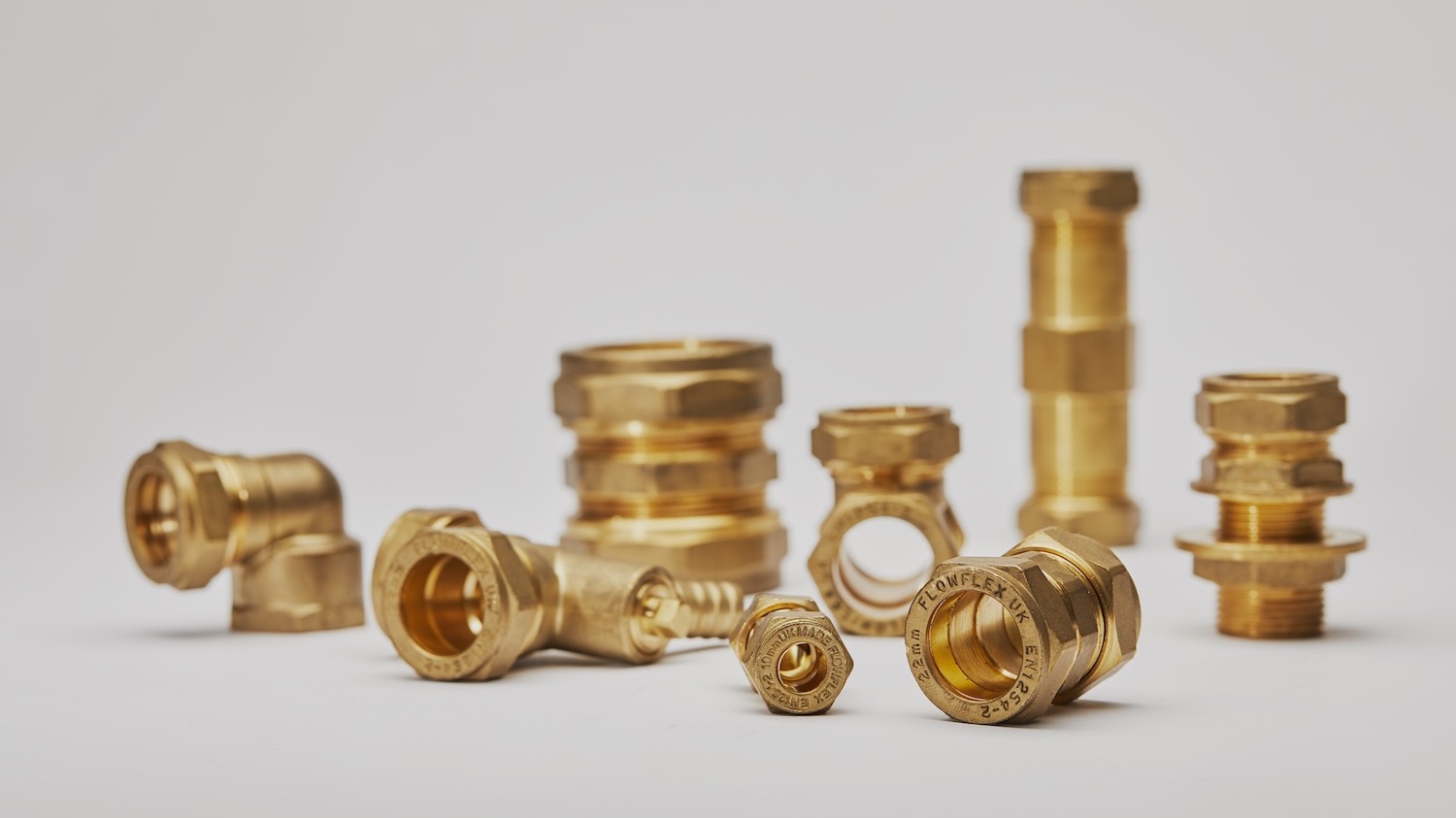
The method does not require soldering heat, and the joint can potentially be demounted. That can be useful when heat is not appropriate or when future access matters. Neither benefit is universal, however. If the connection involves copper, plastic or steel, confirm that the exact fitting, pipe and any required supporting components are compatible. Wet conditions, reuse and preparation requirements also need to be checked for the selected system rather than assumed from the category.
You can explore the relevant Compression Fittings once those job requirements are clear.
End feed fittings
End feed fittings join copper pipe with heat and separately supplied solder. Capillary action draws the molten solder into the narrow gap between the pipe and fitting, creating the joint without a preloaded solder ring.
Elbows, tees and couplings make the method adaptable to different pipework layouts, while the compact copper fitting can give a neat, low-profile finish. The trade-off is that end feed work requires heat, correct materials, suitable preparation and competent technique. Those requirements should be considered alongside the site rules and the conditions around the connection.
Solder ring fittings
Solder ring fittings, sometimes described as pre-soldered fittings, contain a measured ring of solder inside the fitting. They still use heat and capillary action. The important distinction from end feed is that the solder is already held within the fitting instead of being fed separately.
Preloaded solder can simplify solder handling and may be useful where working space is constrained, but it does not remove the need for correct preparation, controlled heating and competent work. Current manufacturer instructions remain the guide for the selected fitting and application.
See the Solder Ring Fittings collection when this joint method suits the job.
Copper push-fit fittings
A copper push-fit fitting uses an internal gripping mechanism to hold prepared copper pipe when it is inserted. The connection needs neither soldering heat nor compression-nut tightening, which can make it a quick option with a clean external finish.
That convenience should not be treated as proof of suitability. Size ranges, stated applications, pipe preparation and insertion requirements vary by system, so check the current instructions for the exact fitting. Do not rely on a blanket size limit or assume that the method is inherently more or less secure than another properly specified option.
Copper press fittings
A copper press fitting uses a compatible press tool to deform the fitting around the pipe. An internal O-ring provides the seal. The method avoids soldering heat and can create a quick, clean connection, but it depends on system-specific fittings, compatible tooling and correct pressing.
Press-tool cost helps explain why this method is often associated with professional work, though that does not establish who may use every system. The selected manufacturer's current application, size and operating limits still govern the decision.
Browse Copper Press Pipe Fittings when the tooling and technical requirements align with the project.
Compare and confirm
No fitting method ranks first for every project. A short final check keeps the decision tied to the real installation:
Are the pipe, fitting and supporting components compatible?
Does the selected system provide the required shape and size?
Do its stated service and operating limits suit the job?
Can the site accommodate the method's heat, access and wet-condition constraints?
Are the correct tools available, and is the installer competent to use the method?
Does the joint need to be potentially demountable, and does its finish suit the location?
If any answer remains uncertain, check the current technical information for the exact system or seek competent advice before buying or arranging the work.
Take the next step
Once you have narrowed the joint method and confirmed the decision-critical details, use the Copper Pipe Fittings collection as a practical next step. Choose by the needs of the job, then verify the exact fitting before proceeding.