
In this guide
When a shower only manages a weak trickle, a traditional gravity-fed system may be part of the reason. The good news is that a suitable shower pump can sometimes help improve the flow available at your outlets. The useful first step is not choosing a pump straight away. It is understanding how your system is fed, how much natural flow it already has and whether the issue affects hot water only or both hot and cold supplies.
How a gravity-fed system affects water flow
Many traditional domestic systems use a cold-water storage cistern, often in the loft, to feed a hot-water cylinder and household outlets. Water flow in this arrangement is influenced by gravity and by the vertical distance between the stored water and the outlet you are using. That can leave a modern shower, or several outlets being used around the home, feeling less responsive than you would like.
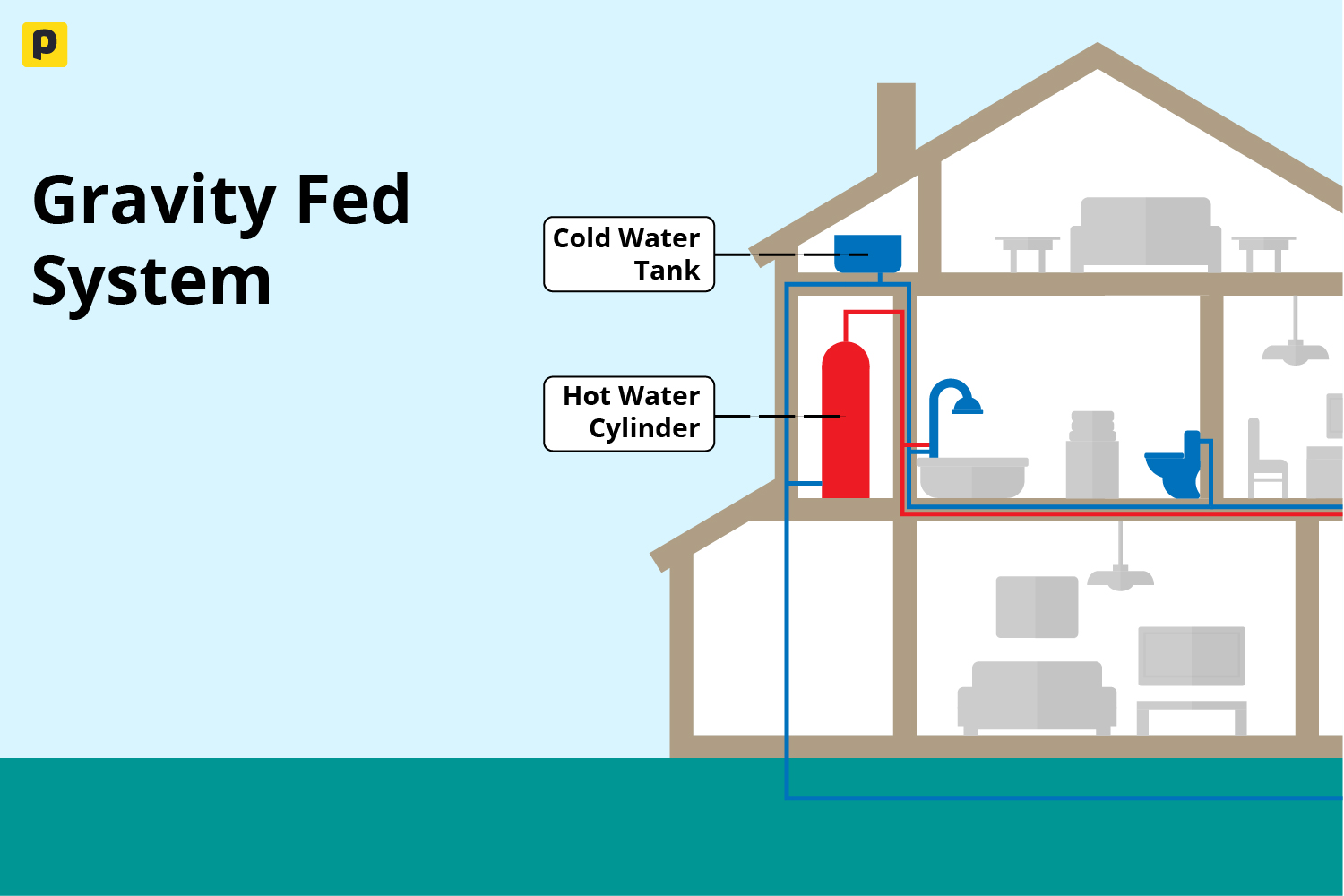
Low flow does not automatically mean that a pump is the answer. It is a reason to look more closely at the system and at the outlets affected. Once you know what is happening, you can compare the right type of shower-pump option with more confidence.
Start by checking what is affected
Before comparing shower pumps, note where the poor flow occurs. Is it limited to the hot supply, or do hot and cold outlets both feel underpowered? Is the issue most noticeable at one shower, or across more than one outlet?
It is also worth measuring the natural flow at the outlet you are concerned about. A result below 2 litres per minute is a practical sign that the system needs closer assessment, but it is not a complete suitability test on its own. The full arrangement still matters, including the water source, outlet level and the supplies that need support.
Positive head and negative head
The term “head” describes the relationship between the stored water and the outlet. In simple terms, a higher outlet can have less natural gravity-fed flow available to it than one lower down. This distinction helps separate two common shower-pump categories.
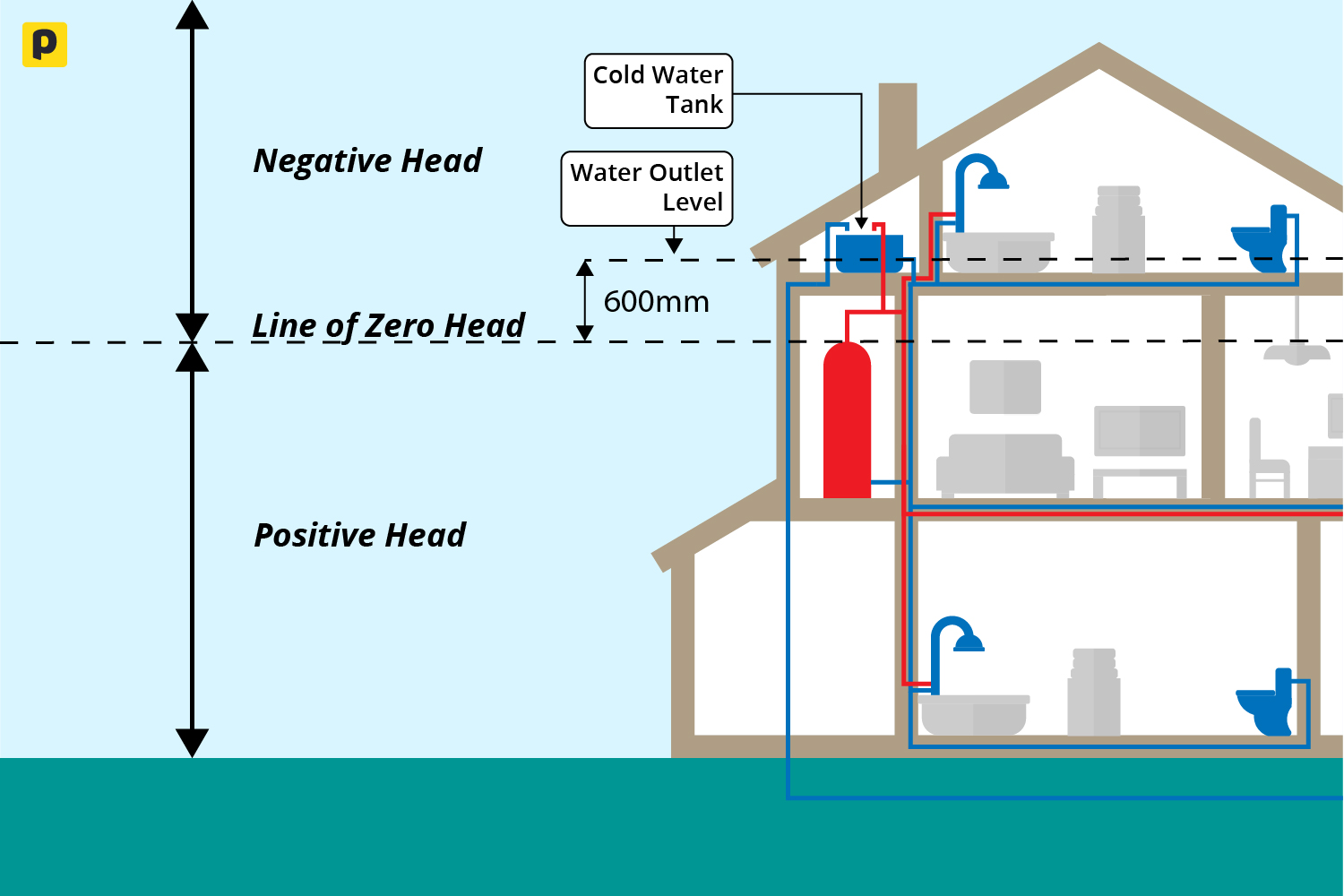
Positive Head Shower Pumps use existing gravity-fed flow to start. They can be relevant where the system has enough natural flow at the outlet for that type of pump to operate. Negative Head Shower Pumps, sometimes called universal pumps, are intended for situations with very low or no natural flow. The correct category depends on the real system, so confirm the conditions before selecting a pump.
Do you need to boost one supply or two?
The next decision is whether the poor flow is limited to hot water or affects both gravity-fed supplies. Where the cold supply is adequate and only the hot supply needs support, a Single Impeller Shower Pump may be a relevant category to explore. Where both gravity-fed hot and cold supplies have poor flow, a Twin Impeller Shower Pump may be more relevant.
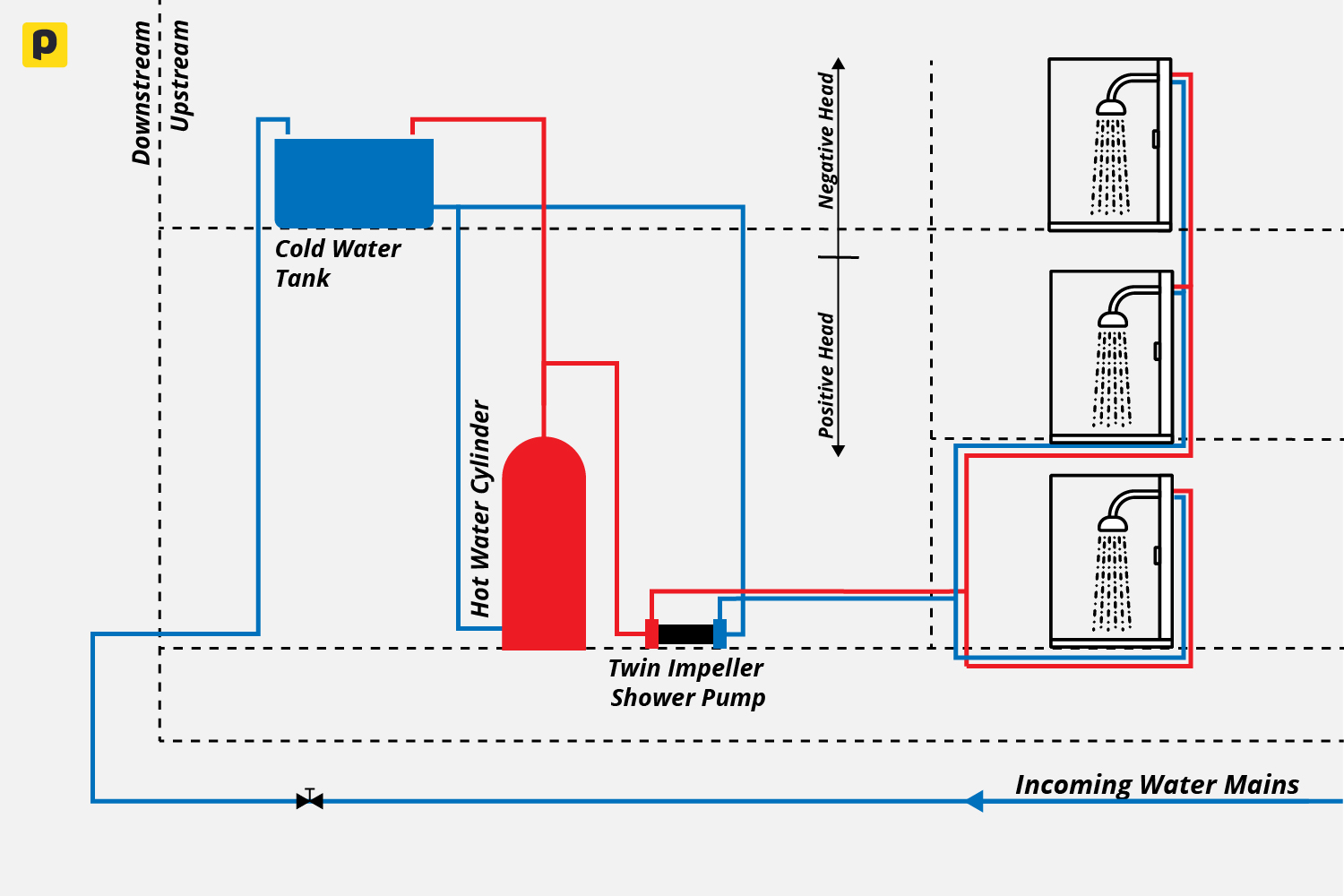
The diagram shows the principle of supplying both hot and cold water through a twin-impeller arrangement. It is there to make the distinction easier to visualise, not to set out an installation method or confirm compatibility for a particular home.
Check compatibility before choosing
A pump should match the system it will serve. Confirm the available stored water, pipework, outlets, electrical provision and the manufacturer’s instructions before any installation or alteration is planned. If you are unsure, a competent installer can assess the system-specific details and help you choose an appropriate route.
Once you understand your system and the supplies you need to improve, you can explore the Shower Pumps range with a much clearer idea of which type may suit your project.