
In this guide
A sound soldered copper joint starts with the right combination of pipe, fitting and solder for the intended service. Choosing the wire in isolation is not enough. Compatibility, operating conditions, surface preparation and competent hot work all affect whether the proposed jointing system is appropriate.
This guide helps you understand those decisions before buying materials or arranging work. It explains the role of solder and capillary action without turning hot work into a do-it-yourself flame-handling tutorial.
Start with the complete jointing system
Solder wire is a metal alloy used with compatible copper pipe and fittings to form a permanent joint. Its composition varies by application and may include tin and copper, or other metals such as lead, silver or antimony. Those ingredients should not be treated as an interchangeable recipe.
The pipe, fitting, solder and intended service need to be considered together. A suitable choice for one application is not automatically suitable for another, even if the solder looks similar or seems easy to work with.
Choose solder for the intended service
Begin with what the pipework will carry and the conditions in which the joint will operate. Then check that the pipe, fitting and solder are compatible and that the manufacturer's technical information covers the proposed use.
Different solder compositions can behave differently. Package size, a general strength description or ease of use does not establish suitability. Product-specific guidance and current requirements are the dependable basis for a decision.
Drinking-water pipework requires lead-free solder
Plumbing solder is commonly divided into leaded and lead-free types. Leaded solder has a lower melting point and can be easier to work with, but it must not be selected for pipework carrying drinking water because of concerns about lead exposure.
Lead-free solder is the required standard choice for drinking-water pipework. That does not mean every lead-free product suits every plumbing or heating application. Check its stated composition, intended service and compatibility with the actual pipe and fitting.
Sound surfaces come before soldering
Joint quality begins with compatible pipe and fittings that are correctly matched, undamaged and free from imperfections. The mating surfaces need to be clean and free of oxidation before assembly. Where flux is required, use a suitable product in line with its manufacturer instructions rather than improvising a substitute.
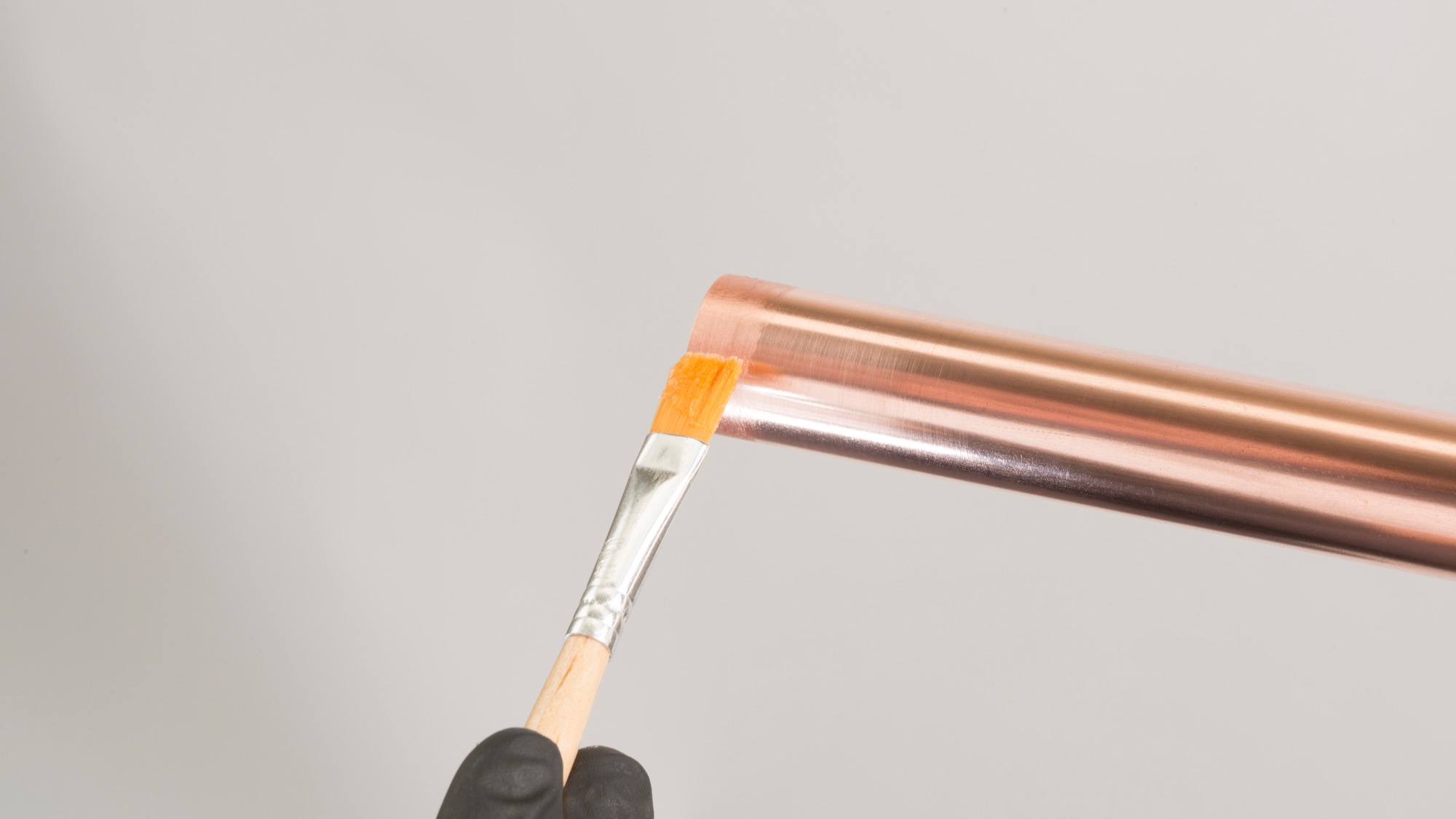
How solder fills a prepared joint
With a correctly prepared assembly, controlled heat brings the joint to the condition where the solder can melt. Capillary action then draws the molten solder into the small space between the fitting and pipe.
This is the useful principle to understand. It is not a reason to guess at flame position, torch settings, temperatures or heating times. Overheating can damage or deform the materials, so the practical hot-work method must follow manufacturer instructions and be handled competently.
Cooling, cleaning and inspection matter
A soldered joint should cool naturally rather than being force-cooled with water. Once it is cool, flux residue should be removed and the joint checked for visible gaps, damage or imperfections.
A suspect joint or any sign of leakage needs competent assessment and a proper remake. Simply reheating the joint or adding more solder is not a reliable general repair instruction.
Keep hot work with a competent person
Soldering with a torch is hot work. It brings burn, fire and fume risks, and the surrounding materials and existing services can change what precautions are required. The work should be completed by a competent person who can follow the product instructions, applicable rules and the precautions needed for the particular site.
Checks before buying or arranging work
- Identify whether the pipework will carry drinking water.
- Confirm the pipe and fitting are correctly matched, undamaged and compatible.
- Check the solder composition and its stated intended service.
- Verify the operating conditions against the manufacturer's technical guidance.
- Decide whether a competent installer is needed for the hot work and site checks.
If lead-free solder is appropriate for the confirmed application, you can view the Lead Free Solder Wire 500g Pack. Check its current product information against the pipework, fitting and intended service before making a selection.
With those checks made, you can approach a soldered copper joint as a complete system rather than a choice of wire alone, and move forward with the right materials and competent support.