
In this guide
A well-chosen bathroom heating system makes cold mornings more comfortable, helps towels dry between uses and gives the room a more welcoming feel. The right answer is not the same for every bathroom. It depends on how much heat the room needs, where a heat source can fit and whether your priority is whole-room warmth, warm towels, a comfortable floor or a combination of the three.
Why bathroom heating matters
Bathrooms can feel colder than other rooms because tiled floors and other hard surfaces are cool to the touch. Ventilation is also essential for removing warm, moisture-laden air, but that process naturally lets some heat escape. Suitable heating helps restore comfort without getting in the way of the ventilation the room still needs.
Heating, ventilation and moisture management should work together. A warmer room may be more pleasant to use, but heating alone is not a remedy for damp or mould. Extract ventilation, regular airflow and attention to the source of excess moisture remain important.
Assess the room before choosing a heater
Bathroom size is a useful starting point, but it does not tell the whole story. Two rooms with the same floor area can have very different heating needs depending on their construction and layout.
Before comparing products, consider:
- Floor area and ceiling height: together, these give a clearer picture of the space that needs heating.
- External walls and windows: their number, size and condition can affect how quickly warmth is lost.
- Insulation and glazing: these influence the room's overall heat demand.
- Ventilation: the room needs sufficient airflow even when you are trying to retain warmth.
- Your target comfort level: think about when the bathroom is used and how quickly you want it to feel warm.
- Available wall and floor space: doors, sanitaryware, storage and clearances can narrow the practical choices.
- The existing heating arrangement: this affects which options can be added or connected sensibly.
A room-specific heat-loss or output assessment is the soundest basis for choosing a heat source. It lets you compare verified product output with the room's likely demand instead of relying on dimensions or appearance alone.
Four bathroom heating options
Heated towel rails
Heated towel rails combine a useful everyday benefit with a neat bathroom-friendly format. They provide a place to hang towels and can contribute heat to the room, with designs available to suit a wide range of layouts and finishes.
The important question is whether a particular rail can meet the room's heating requirement. Output varies, and covering much of the rail with towels can affect how much heat reaches the room. In a compact, well-planned bathroom, a suitable towel rail may cover both jobs. In a room with a higher heat demand, it may work better alongside another heat source.
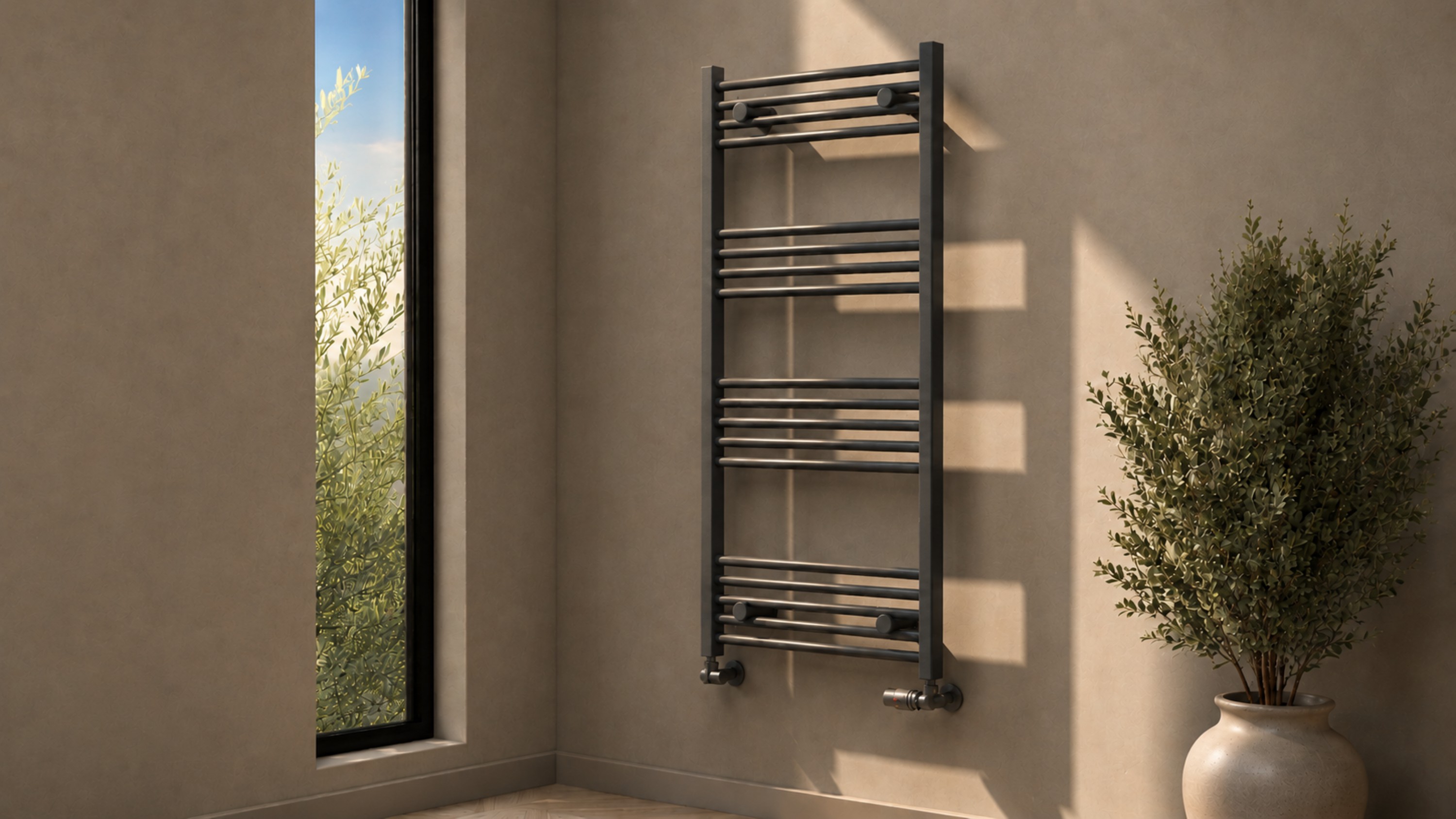
You can explore the Towel Rails collection to compare styles, then check the output and installation requirements of any option against your bathroom.
Underfloor heating
Underfloor heating provides warmth at floor level and keeps wall space clear for storage, sanitaryware or other fittings. The warm-floor effect can be particularly appealing in a tiled bathroom, and the heat is spread across the available heated area rather than concentrated at one wall-mounted unit.
It needs more planning than simply replacing a radiator. Floor construction, finished floor covering, build-up height, controls and the wider system design all affect suitability. Retrofitting can also involve more disruption than installing a wall-mounted option, especially when the existing floor is staying in place. It is therefore most straightforward to consider during a wider bathroom renovation, while still checking the proposed design with a qualified professional.
Fixed electric bathroom heating
A fixed electric bathroom heater can provide independent control, which may be useful where the bathroom follows a different schedule from the rest of the home. Depending on the suitable product and controls, it can also offer a responsive way to warm the room when it is needed.
Bathroom electrics require careful product and location choices. The appliance, its ingress protection, its position and the installation method must all be suitable for the intended bathroom location. Use a fixed bathroom-appropriate product and have the installation assessed and completed by a qualified electrician. Portable or general-purpose electric heaters should not be treated as bathroom heating options.
Bathroom radiators
A correctly sized radiator is a strong option when dependable whole-room heat is the main goal. Bathroom radiators are available in traditional and contemporary forms, including designs that make use of taller or narrower wall areas.
Check the verified output against the room's heat demand, along with the available wall space, pipe positions and compatibility with the existing heating arrangement. Placement also matters. Regularly covering a radiator with towels or enclosing it behind a cover can reduce the heat delivered freely into the room.
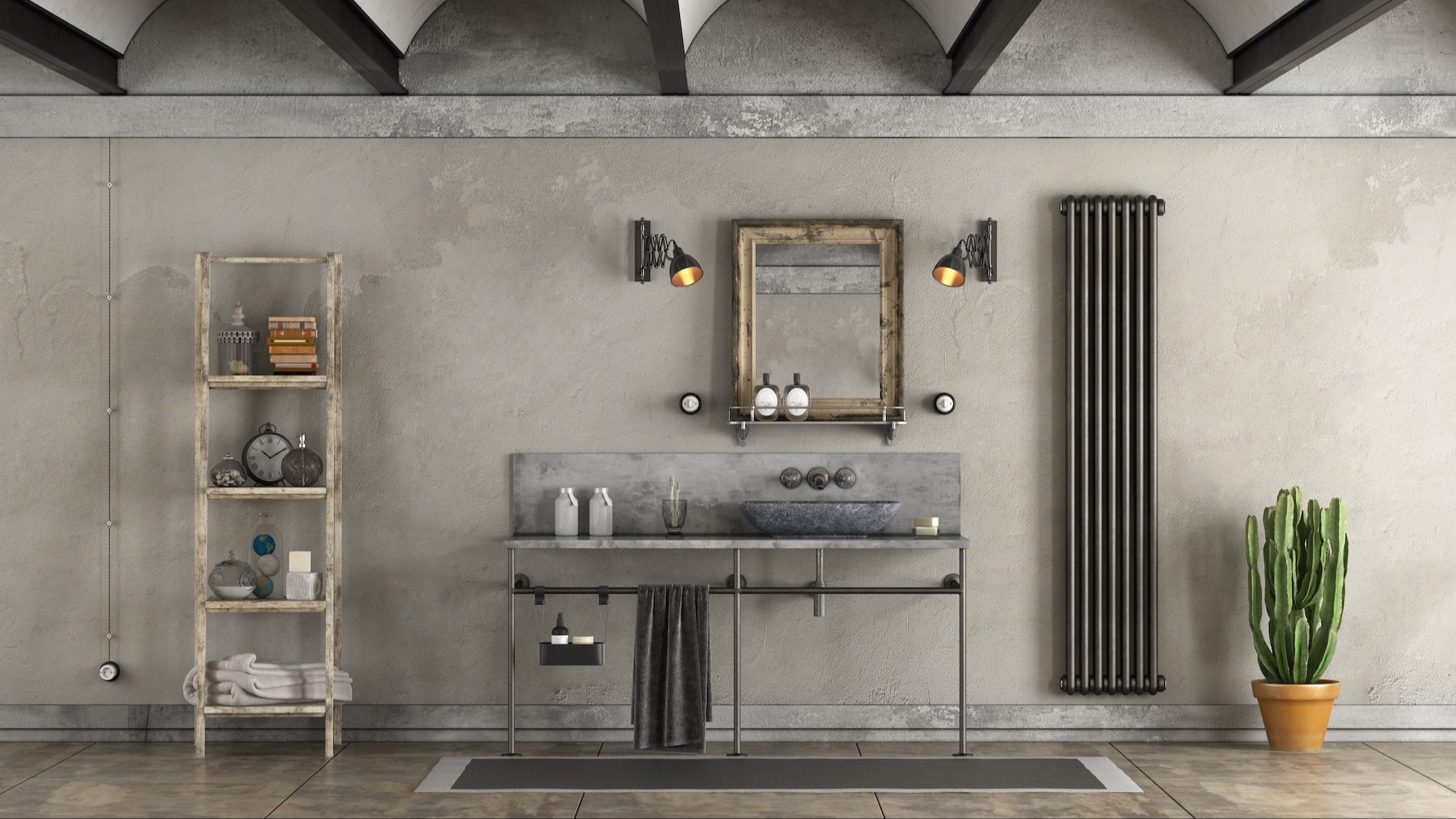
Browse the Bathroom Radiators collection for suitable formats and finishes. If you want to work through output, space and system considerations in more detail, see Choosing the Perfect Radiator for Your Bathroom.
Compare the practical trade-offs
Once you have a shortlist, compare the options against the same set of practical questions:
- What is the primary job? Decide whether you mainly need whole-room heat, towel drying, warm flooring or a balanced combination.
- Can it meet the heat demand? Compare verified output with a room-specific assessment rather than assuming a product type will be sufficient. For help understanding BTUs and comparison ratings, read BTUs and Delta Ratings in Radiators Explained - The Ultimate Guide.
- Where can it fit? Account for sanitaryware, doors, storage and the wall or floor area available.
- How does it work with the home? Consider the existing heating arrangement, pipework, electrical provision and preferred controls.
- How disruptive is installation? A straightforward replacement and a floor-based retrofit involve very different amounts of work.
- When will it run? Think about household routines, warm-up expectations and whether the bathroom needs separate control.
- What does the budget cover? Compare product purchase and installation work separately from ongoing use. No heating type is automatically the cheapest in every home.
- Does it suit the room long term? Include appearance, cleaning access, towel use, maintenance and any future bathroom changes.
Matching an option to your priorities
If warm towels and efficient use of wall space lead your list, start by checking whether a heated towel rail with sufficient verified output can cover the room's heat demand. If a warm floor and clear walls matter most, underfloor heating may justify the extra planning, particularly as part of a wider renovation.
Where whole-room heat is the priority and the existing heating arrangement supports it, a correctly sized bathroom radiator is a sensible place to begin. If separate timing or independent control is important, a fixed electric bathroom heater may be worth considering, subject to product and location suitability.
These are starting points, not universal rankings. The final choice should still be checked against the bathroom's calculated heat need and the practical installation constraints.
Choose with confidence
- Assess the room, including its size, construction, ventilation and available space.
- Decide whether your priority is room heating, towel drying, floor comfort or a combination.
- Identify the heating and electrical arrangements already available.
- Compare verified outputs and control options.
- Separate purchase and installation considerations from the likely pattern of ongoing use.
- Confirm product and location suitability before work begins.
For electrical work, pipework changes, underfloor system design or any uncertainty about output, ask a suitably qualified professional to assess the room and proposed installation. With those checks in place, you can choose bathroom heating that feels comfortable, fits the space and works sensibly with the rest of your home.