In this guide
A well-matched hot-water cylinder gives a home a ready reserve of heated water for taps, showers and baths. The useful choice is not simply “which tank is biggest?” It is how the cylinder is supplied, how it is heated, how much hot water the household uses at busy times and how quickly the system can recover afterwards.
Two separate descriptions help you understand the design. Vented or unvented tells you how water reaches the cylinder and how pressure and expansion are managed. Direct or indirect tells you how heat reaches the stored water. Keeping those two questions separate makes an existing system easier to identify and a replacement easier to discuss.
How storage, draw-off and recovery work
A hot-water cylinder stores a finite volume of heated wholesome water for later use. When an outlet draws hot water, incoming cold water replaces what has been used. The heat source then raises the stored water back to its controlled temperature.
That means the cylinder is neither an instant source nor an unlimited one. Its nominal capacity describes the vessel, while the usable supply in a home also depends on the operating conditions and demand pattern. Recovery is the process of reheating after use. A household can therefore use the available hot water faster than the system restores it, particularly when several outlets are used close together.
Capacity, peak demand and recovery must be considered together. A larger stored volume can extend the period before the supply is depleted, but it does not by itself improve pressure, flow through the pipework or the rate at which the water reheats.
Vented gravity-fed systems
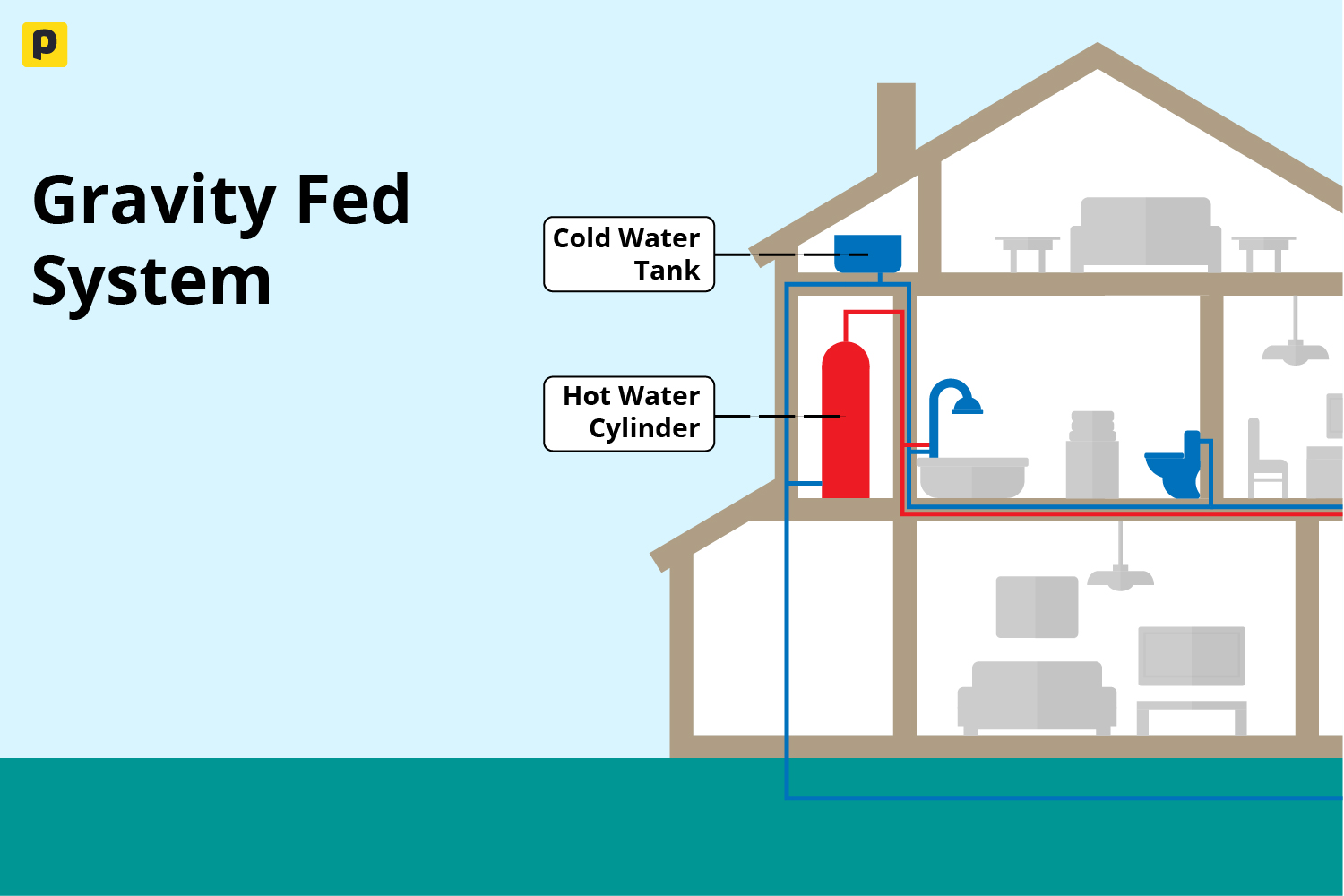
A vented cylinder is supplied from a cold-water storage cistern positioned above it, often at high level. Water travels from that cistern to the cylinder under gravity. An open vent provides a route to atmosphere and accommodates expansion within the designed arrangement.
Outlet performance depends on the vertical head, the pipework and the condition of the complete system. In practical terms, the height relationship between the stored cold water and the outlets matters, but it is only one part of the picture. Pipe sizes, routes, restrictions and the outlets being used also affect what you experience.
If low-pressure performance is the issue you are investigating, From Dribble to Deluge: How To Boost Gravity Fed Systems explains the checks that inform a suitable response. Treat that as a starting point for assessment, not a promise that a particular pump or alteration will suit your installation.
Unvented mains-fed systems
An unvented cylinder receives cold water directly from the mains and stores it under pressure. It does not use the open header cistern found in a vented arrangement. This can support a different outlet experience, but it does not guarantee a particular pressure or flow rate.
The incoming mains flow and pressure, the pipework and the wider system design still set practical limits, especially when more than one outlet is open. A pressurised cylinder cannot create an incoming supply that is not there.
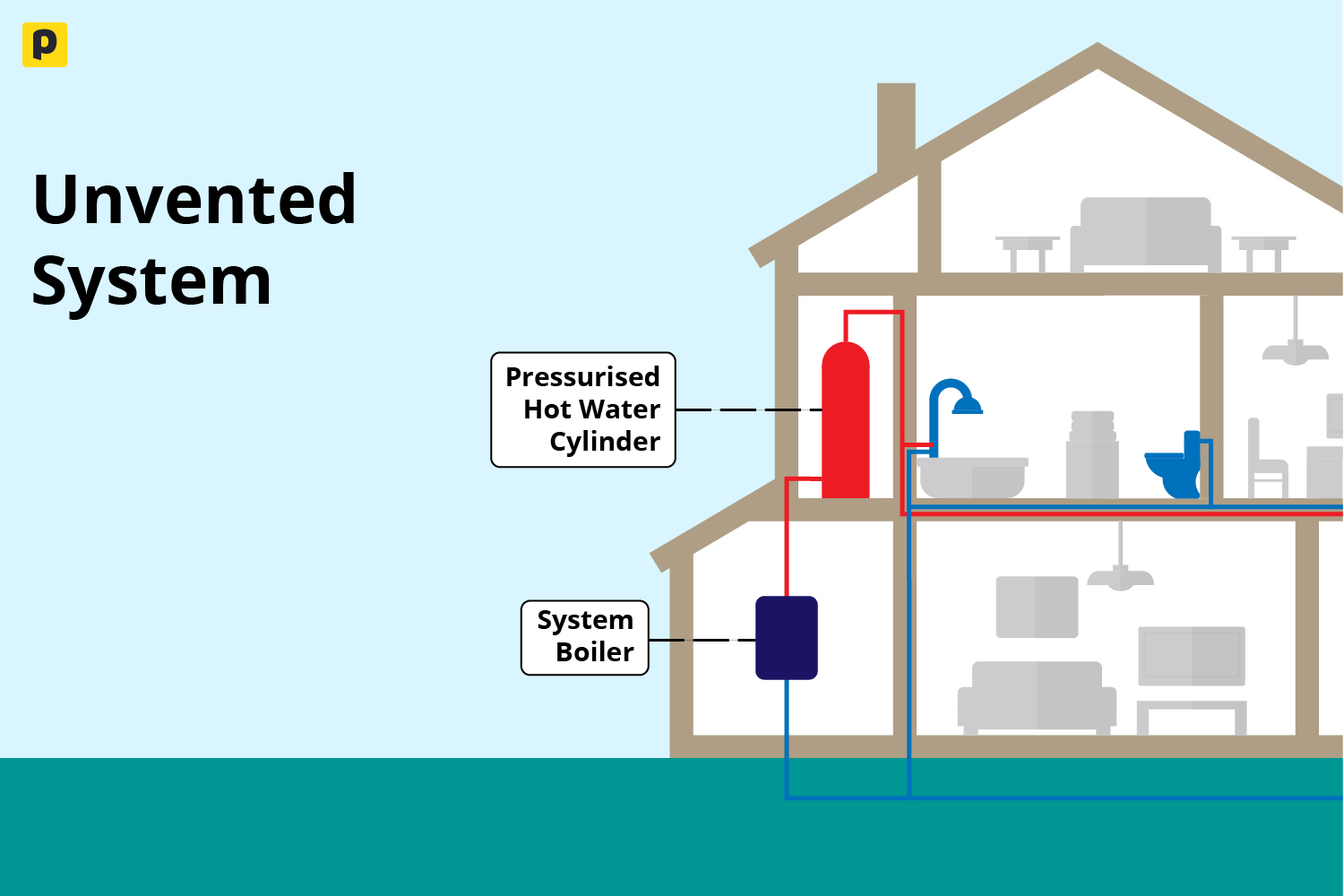
Because the stored water is pressurised, expansion provision and temperature or pressure safety devices are integral to the system. Their selection, installation and discharge arrangements are not user adjustments. An unvented system should be installed and assessed by a competent person in line with the cylinder manufacturer’s instructions and the requirements that apply to the property.
Direct and indirect heating
Direct and indirect describe the heating method, not whether the cylinder is vented or unvented. A cylinder can, for example, be both vented and indirect.
A direct cylinder heats the stored water with an electrical element inside the vessel, commonly called an immersion heater. The element, its controls and the electrical supply are part of the designed system and need to be suitable for the cylinder.
An indirect cylinder receives heat from a compatible external source, such as a boiler or heat pump, through a designed heat exchanger, typically a coil inside the cylinder. The water in the external heating circuit transfers energy through that coil while remaining separate from the stored potable water.
Some indirect arrangements also have an immersion heater, but it should only be described as a backup when a suitable element is actually fitted, operational and intended for that use. Do not assume its presence from the cylinder type alone.
Controls, expansion and safety
Thermostatic controls regulate the heating of the stored water. Overheat protection provides an additional safety layer, while the system’s expansion and relief arrangements manage changes that occur as water is heated. The exact components differ with the cylinder and system design, so they must be treated as a coordinated safety arrangement rather than isolated accessories.
Do not adjust safety controls, interfere with relief or discharge pipework, or undertake electrical work based on a general article. Excessively hot water, unusual boiling or rumbling noises, steam or moisture, leaks, persistent discharge or controls that are not working as expected all justify prompt assessment by a competent person.
A competent assessment can identify the cause, check the manufacturer’s requirements and confirm which local requirements apply. That is safer than treating one visible symptom as a diagnosis of the whole system.
Choosing capacity and recovery
There is no reliable universal cylinder size based only on bedroom count. The right assessment considers how and when hot water is actually used, then checks whether the complete system can store and restore an appropriate supply.
- Peak occupancy and whether several outlets are likely to be used close together.
- The household’s mix of showers, baths, basins and kitchen use.
- Usable capacity rather than relying only on the nominal cylinder figure.
- The recovery rate supported by the heat source and the cylinder’s coil or element capability.
- The incoming supply, gravity head, pipework and controls that affect delivery.
- Available space, installation access, insulation and standing heat loss.
Two cylinders with a similar nominal capacity can recover at different rates when their heat sources or heat-transfer arrangements differ. Equally, rapid recovery does not remove the need for enough usable volume at the busiest point of the day. A competent installer can balance those factors against the actual demand pattern.
Pressure, flow, volume and demand
These terms describe different parts of performance and should not be used interchangeably.
- Static pressure is the available pressure when water is not flowing.
- Flow rate is the amount of water delivered over time while an outlet is open.
- Stored volume is the finite reserve of heated water available for draw-off.
- Recovery is how the heating arrangement restores that reserve after use.
A favourable figure in one area does not guarantee good performance everywhere. Stored volume may support a busy period, but it cannot correct every incoming-supply or pipework restriction. Likewise, pressure alone does not show how several outlets will perform together.
If performance is disappointing, avoid selecting a pump, accumulator or pressure alteration from the symptom alone. The supply arrangement, measured performance, pipework, outlets and applicable requirements need to be assessed together before a solution is chosen.
Efficiency, condition and a useful next step
A cylinder loses some stored heat over time, and the heating system must replace that standing heat loss. The cylinder’s insulation, nearby pipework, controls and overall condition all affect the result. Those factors are useful to compare, but they do not support a universal bill-saving promise.
Do not add an insulation jacket simply because a cylinder feels warm. First identify the cylinder and check its manufacturer’s guidance, condition and safety or service-access requirements. The appropriate approach can differ between designs.
Before speaking to a competent installer, gather the information that will make the conversation useful:
- Whether the system appears vented or unvented.
- Whether the cylinder is heated directly, indirectly or by both methods.
- The household’s busiest hot-water period and which outlets are used.
- What is known about the incoming supply or gravity-fed performance.
- The available space and any access constraints.
- Any unusual heat, noise, leakage, discharge or control behaviour.
With those details, an installer can assess capacity, recovery, supply performance and safety as one system. That gives you a sound basis for choosing a suitable cylinder or deciding what existing equipment needs attention, without relying on a generic sizing table or a guessed pressure fix.