
In this guide
The right radiator can make a room easier to heat without forcing an awkward fit or a difficult installation. Start with the room's heat requirement, then choose an emitter whose verified output, system type, dimensions and connections suit the job. Once those essentials line up, style and finish can help you make the final choice.
Start with the room heat loss
Before comparing radiator designs, establish how much heat the room is expected to lose under the intended design conditions. That figure gives you the required heat output to work towards. It is more useful than choosing by floor area alone because two rooms of the same size can have very different heating needs.
A useful room heat-loss assessment considers:
- the room's length, width and height
- the temperature you want to maintain
- insulation in walls, floors and the roof or ceiling
- the size and type of glazing
- external walls, floors and ceilings
- exposure and orientation
- ventilation and uncontrolled air leakage
An online calculator can provide an estimate for early product comparison, but it cannot guarantee the final design requirement. Ask a competent heating professional or system designer to confirm design-critical figures, especially where a lower-temperature system is planned.
Read output ratings on one basis
Radiator output is commonly presented as watts or BTU per hour. A British thermal unit is a unit of energy, so the time basis matters when you are comparing heat output. If one product is listed in watts and another in BTU per hour, convert them to the same unit before comparing them.
For a wet radiator, Delta T is the difference between the mean water temperature through the radiator and the design room temperature. Delta T50 is a common reference condition, but it is not the only valid one. A radiator produces less heat when the temperature difference is lower, so compare products at the same Delta T or use the manufacturer's conversion data for the intended flow and return temperatures.
The guide to radiator BTUs and Delta ratings explains how to make that like-for-like comparison.
Choose wet or electric first
A wet central-heating radiator connects to a system that circulates heated water. Its output depends on the radiator, the water temperatures and the room temperature. An electric radiator uses a declared wattage and needs suitable electrical provision, controls and siting in line with the manufacturer's instructions.
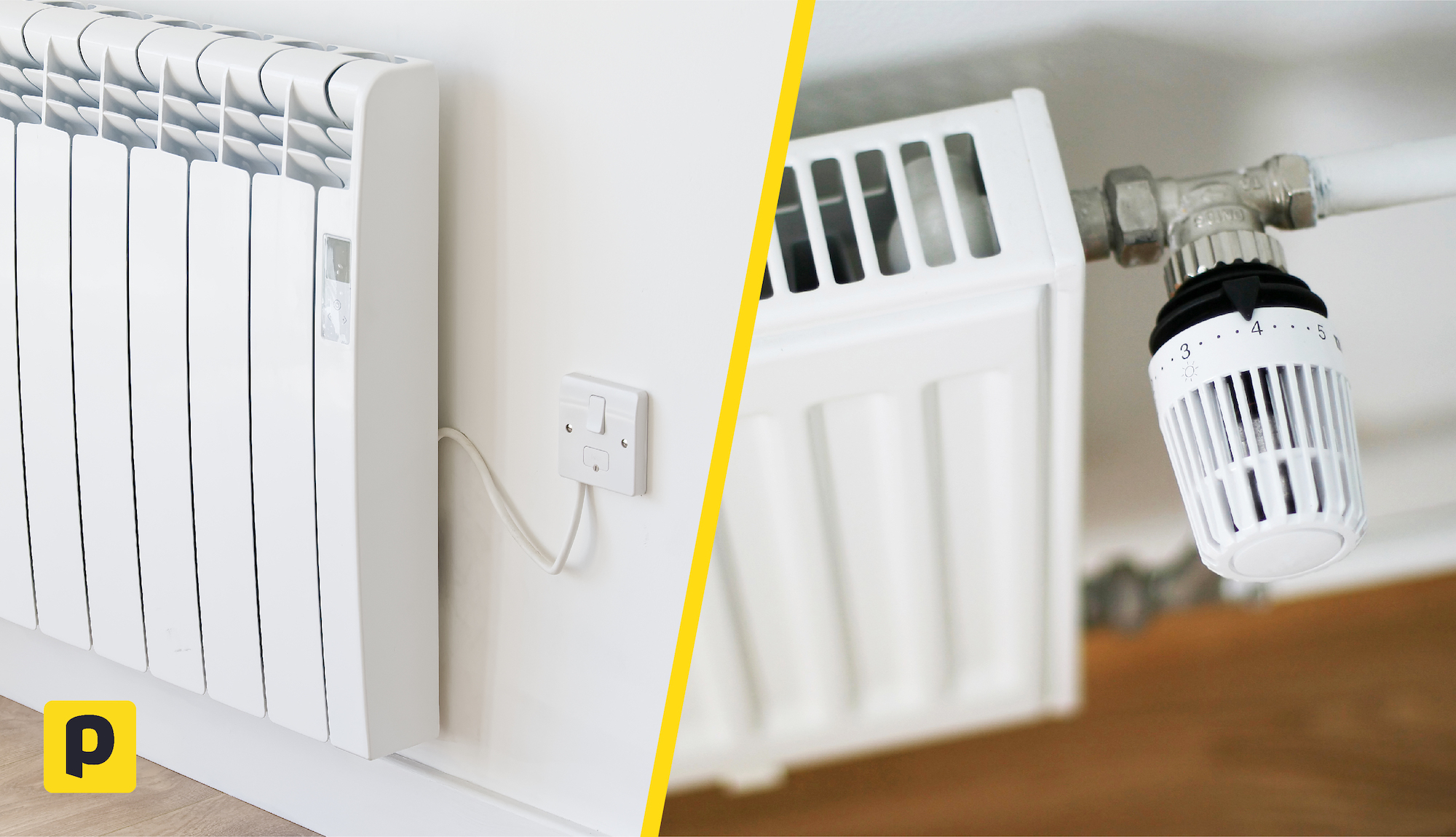
Hydronic Delta T adjustment does not apply to an electric emitter. Equally, wattage alone does not tell you whether electric or wet heating is the better arrangement for a particular project. Existing infrastructure, room use, controls, installation scope and the calculated heat requirement all matter. Use the electric versus traditional radiator guide to compare the wider system decision before narrowing the product choice.
Match type and size to output
Use the exact declared output rather than assuming a large radiator must be the hottest. Within a comparable product range, extra surface area, panels or convector elements may increase output, but physical dimensions or material alone do not prove which model gives more heat. Compare the published figures on the same rating basis.
Common formats solve different space and design problems:
- panel radiators provide familiar horizontal options in a range of panel and convector arrangements
- column radiators offer a different construction and appearance, with output varying by model and size
- vertical radiators can use narrow wall areas where horizontal space is limited
- towel radiators can warm towels and contribute heat, but their declared room-heating output still needs to suit the requirement
No type or material is universally the hottest, fastest or best. Shortlist only the models whose verified output meets the room requirement at the intended operating conditions. Then compare dimensions, projection and appearance.
Decide between one or several emitters
A room can be heated by one suitable radiator or by several emitters whose combined output meets the calculated requirement. For a large or awkward space, using more than one may make better use of available walls and help distribute heat around the room. It does not automatically make the system more efficient.
When combining emitters, add outputs only when they are stated on the same basis. Check the position and output of each unit as well as the total. The proposed arrangement must also suit the pipework or electrical provision, controls and installation scope. On a wet system, allow for system capacity and hydraulic balancing so the radiators can receive the intended flow.
A little extra nominal capacity does not, by itself, prove that the system will waste energy or cost more to run. Controls, water temperature and the way the system operates all affect the result.
Plan position and airflow
A radiator needs a position that fits its height, width and projection while preserving useful airflow and access. Putting a radiator beneath a window can be practical in some rooms, but it is an option rather than a universal rule. Other positions may make better use of the wall space or suit the pipe and cable routes.
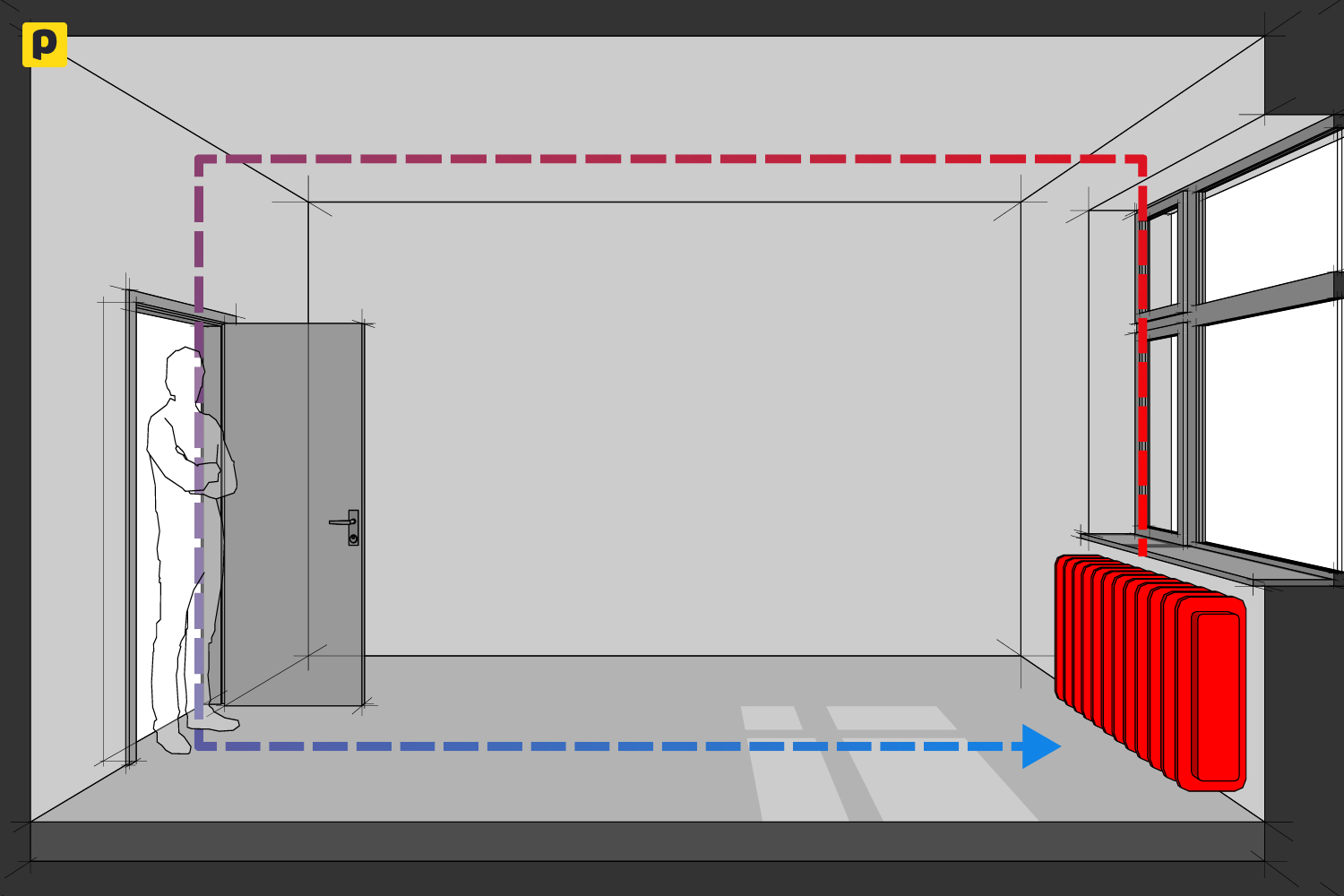
Check door swings, windows, curtains, furniture, radiator covers and the route into the room. Furniture or fabric placed too close can obstruct convection and affect how heat moves through the space. Follow the manufacturer's clearances rather than relying on a general rule, and leave sensible access for controls, valves and servicing.
Check system compatibility and controls
For a wet radiator, confirm the intended flow and return temperatures, pipe connections, valve orientation, system capacity and balancing requirements. If the system runs at lower water temperatures, including many heat-pump arrangements, check the radiator output at those intended conditions. A Delta T50 figure should not be treated as the expected installed output without adjustment.
The guide to air source heat pumps and radiators covers the assessment needed when lower-temperature operation is being considered.
Controls help you regulate heat, but they do not replace correct sizing. Manual valves control water flow directly, while a thermostatic radiator valve responds to the room temperature around it. Compatibility, valve pattern and positioning still need to match the radiator and pipework. The radiator valve guide sets out the main choices and fit checks.
Confirm support and installation access
Before ordering, check the wall construction and the radiator's relevant dry and filled weight. Confirm the manufacturer's brackets and the fixings suitable for the actual wall. A heavy emitter needs proper support, and the right answer depends on the product and the building fabric rather than a generic fixing rule.
Measure the full installation space, not just the visible radiator body. Confirm:
- overall height, width and projection
- connection centres and pipe or cable routes
- manufacturer clearances
- access to valves, bleed points and controls
- space for installation and future servicing
- a workable route to bring the radiator into the room
Pipework, fixed electrical work and final installation should be handled by competent professionals as appropriate. Give them the exact product information and site details so they can confirm the planned arrangement.
Build the final shortlist
A confident shortlist starts with comparable technical information. For each candidate, check:
- the room heat-loss figure
- the required output and whether it is shown in watts or BTU per hour
- the Delta T or other rating basis for a wet radiator
- whether the emitter suits the wet or electric system
- exact height, width, projection and position
- combined output if more than one emitter is planned
- controls, connections and installation requirements
- wall support, clearances and access
When every remaining option meets those requirements, use format, colour and finish to decide which one suits the room. You can then browse the Heating collection with a clear specification in hand.