
In this guide
A shower pump can make a weak gravity-fed shower feel far more useful, giving a suitable system the support it needs to deliver a stronger, steadier flow. For many homes with stored hot water, that can be a worthwhile upgrade. The important part is confirming that the water system, natural flow and stored-water capacity are a good match before choosing a pump.
You do not need to diagnose the whole plumbing system before you start. A few sensible checks will tell you whether a shower pump is the right avenue to investigate and which distinctions matter when you compare your options.
How a shower pump can improve the right system
A shower pump adds pressure and flow support to a suitable water supply. It is most relevant when a shower is fed from stored water and the natural force of gravity is not producing the shower performance you want.
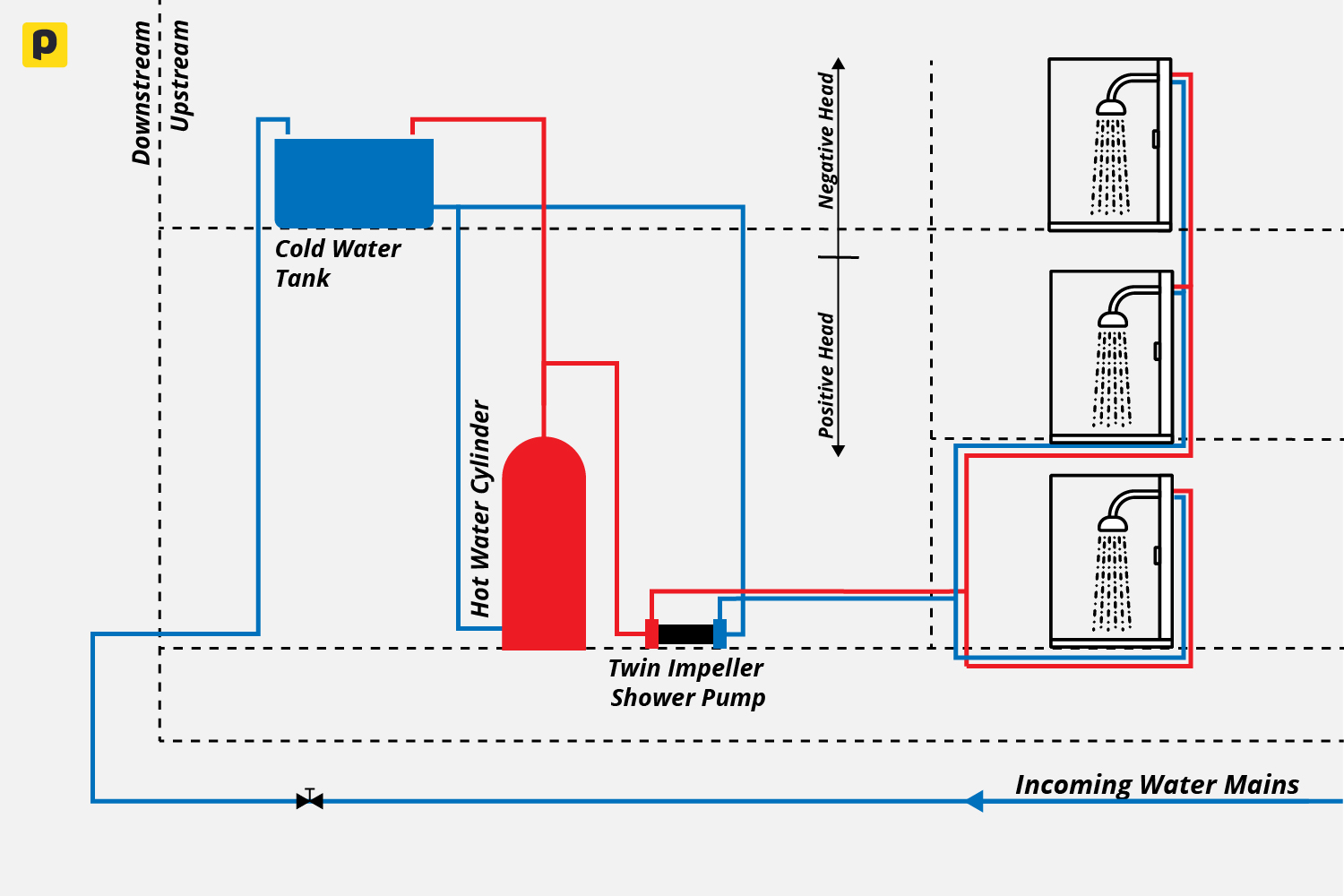
The diagram shows a twin-impeller pump supporting both the hot and cold stored-water feeds. In an appropriate gravity-fed arrangement, this type of support can improve the volume and force of water reaching the shower. The result still depends on the wider system, so treat the pump as one matched part of the installation rather than a universal cure for every weak shower.
First, check whether your shower is gravity-fed
Many older UK homes have a hot-water cylinder, often in an airing cupboard, with a cold-water storage tank in the loft. The tank supplies the cylinder and may also supply cold water to bathroom outlets. This is a common gravity-fed arrangement.
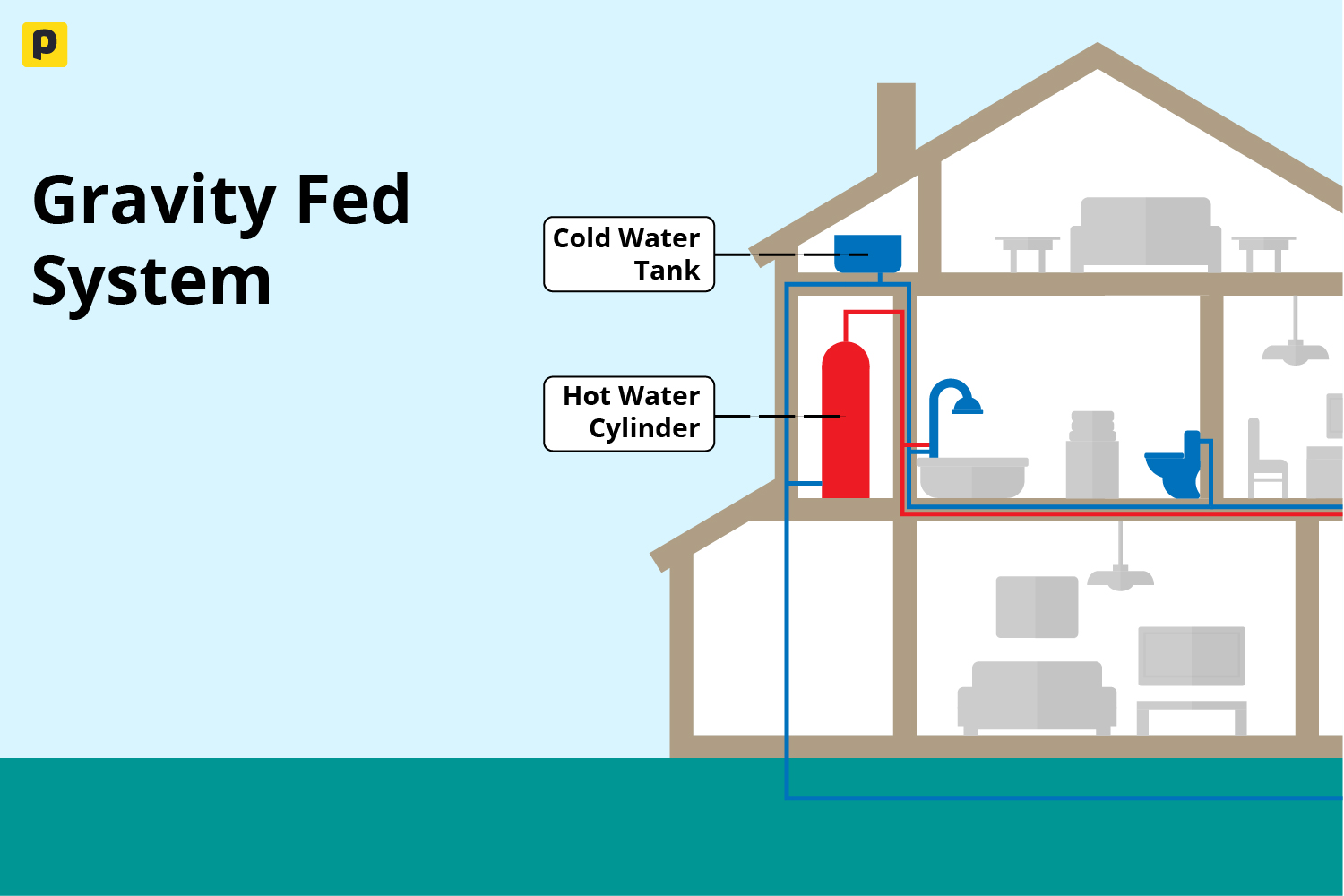
Gravity creates natural pressure through the difference in height between the stored water and the outlet. If there is limited height between the tank water level and the shower head, the shower may receive less natural pressure and flow. You may also notice the shower changing when another outlet is used elsewhere in the home.
A stored hot-water cylinder and loft tank are useful clues, but do not assume that every weak shower has this arrangement. If you cannot identify the supply confidently, confirm it before comparing pumps. The suitability of the pump depends on the actual system feeding the shower.
Measure the flow before you decide
A simple flow test gives you a useful baseline. Fully open the affected outlet, collect the water in a measuring jug or container of known volume, and time how long it takes. Divide the collected volume in litres by the time in seconds, then multiply by 60 to calculate litres per minute.
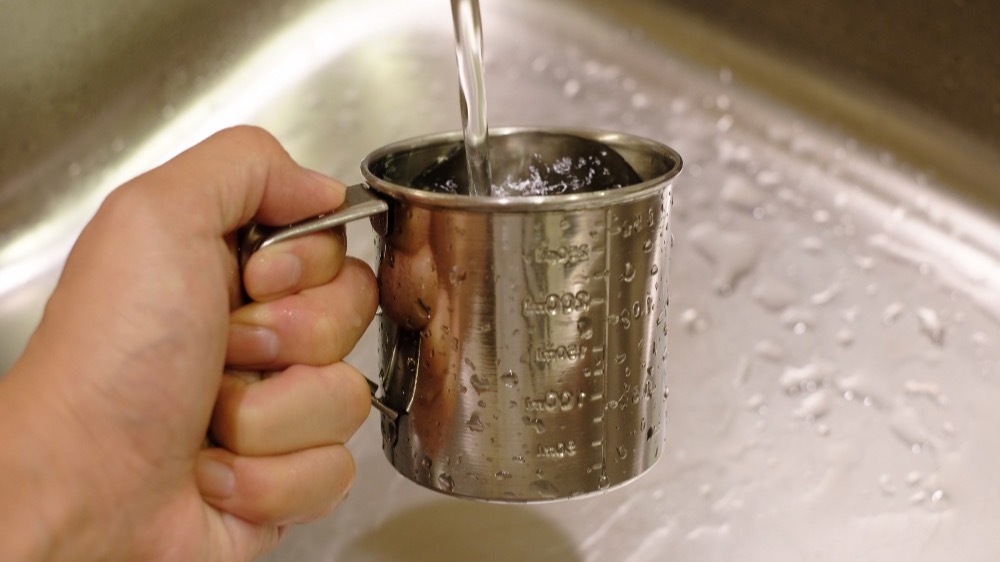
Test the hot and cold feeds separately where practical and repeat the test at the outlet that is causing concern. The comparison can help show whether one feed is noticeably weaker or whether the problem affects the wider supply.
Our step-by-step guide explains how to measure your flow rate. If the results are disappointing, the guide to understanding why your water pressure is low will help you consider other possible causes before settling on a solution.
A measured flow rate is evidence, not a complete diagnosis. Pipework restrictions, valves, fixtures and supply conditions can also affect what reaches the shower. Use the figure to support the next decision rather than treating one threshold as proof that a pump is required.
Pressure and flow are related, but different
Pressure is the force moving water through the system. Flow is the volume of water arriving at the outlet over time. They influence one another, but a shower can have restricted flow for reasons that are not solved simply by adding more pressure.
This is why the system check and the flow test belong together. A suitable pump can support a gravity-fed supply, but it cannot correct every restriction or fault elsewhere in the plumbing. If the shower has changed suddenly, or the weak flow is isolated to one fitting, check the condition of the system and outlet before assuming the pump is the next step.
Decide whether one feed or two need support
The next distinction is whether the shower needs one water feed boosted or both hot and cold feeds supported. A single-impeller arrangement boosts one feed. A twin-impeller arrangement handles separate hot and cold feeds before they reach the shower.
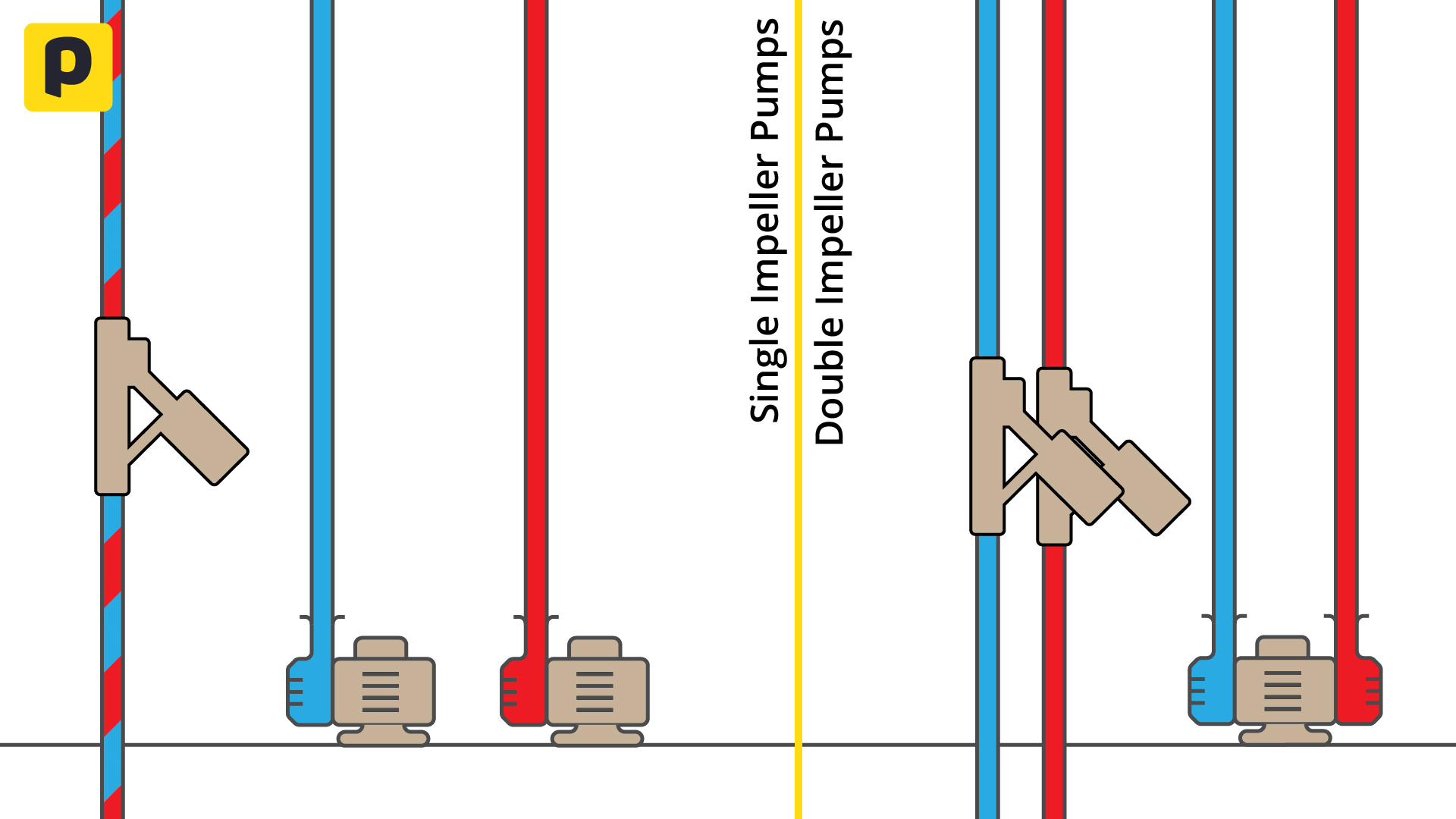
The right arrangement depends on how your shower is supplied, not simply on which pump sounds more powerful. Identify the feeds first and then check the pump manufacturer's current compatibility information for the proposed setup.
You will also need to establish whether the outlet has enough natural flow to activate a positive-head pump or whether a universal negative-head arrangement is more appropriate. Our guide to positive-head and negative-head shower pumps explains that distinction and the practical checks behind it.
Make sure the stored water can keep up
A pump can move stored water through the shower more quickly, which means the hot-water cylinder and cold-water tank must be able to support the expected demand. A pump that is poorly matched to the available storage may use the stored water faster than the system can comfortably supply it.
Consider how long the shower is normally used, whether more than one outlet may run at the same time and how the household uses hot water during busy periods. Then check the available storage and the pump manufacturer's requirements. If the capacity or supply arrangement is unclear, competent advice at this stage can prevent a disappointing mismatch.
Think about noise, location and build quality
Shower pumps contain moving parts, so some operating noise is normal. The pump's location and the way the installation is planned can affect how noticeable that sound is in everyday use. A suitable position also needs to remain accessible for checks and maintenance.
Build quality matters because the pump becomes an active part of the water system. Choose a reputable product that is compatible with the actual supply arrangement, and follow the current manufacturer guidance for selection and installation. This is not the place for guesswork based only on a pressure figure or product label.
Before you buy: a quick shower-pump checklist
- Confirm that the shower is supplied by a system suitable for a shower pump.
- Identify the hot-water cylinder, cold-water storage tank and the feeds serving the shower.
- Measure hot and cold flow at the affected outlet.
- Check whether one feed or both feeds need support.
- Establish whether the system is positive head or negative head.
- Check that the stored-water capacity can meet the expected demand.
- Consider pump noise, access and a practical location.
- Verify compatibility and selection against current manufacturer information.
So, is a shower pump worth getting?
For a suitable gravity-fed shower with weak natural flow, a correctly matched pump can be a very worthwhile upgrade. It can help you get a more useful shower from the system you already have without turning the buying decision into a guessing game.
The value comes from choosing for the real system. Identify the supply, measure the flow, check the head condition and feeds, and make sure the stored water is ready for the extra demand. Once those points line up, you can compare Shower Pumps with a much clearer idea of what your bathroom needs. If any part of the system remains uncertain, ask for competent advice before making the final choice.