
In this guide
Putting a radiator under a window can still be a practical use of space, but it is not a rule every room must follow. The position became common when single-glazed windows were often the coldest surface in the room. A radiator below the glass warmed the air nearby and helped reduce the chill people felt beside the window.
Modern glazing gives you more choice. The best position is the one that lets a correctly sized radiator deliver the room's design heat requirement without its airflow, controls or access being compromised.
Why radiators went under windows
Older single-glazed windows and less airtight construction could leave the glass much colder than the rest of the room. Air cooling against that surface could descend into the occupied space as a downdraught. Placing a radiator directly below warmed the nearby air as it rose, helping to soften that local cold feeling.
That does not mean a radiator seals the window or stops draught infiltration. Gaps around a frame and heat passing through the glazing are building-fabric issues. The radiator provides heat to improve room comfort; it does not repair the source of unwanted air leakage.
How a radiator warms the room
A radiator transfers heat in two ways. Its hot surface provides radiant heat to nearby people and objects, while natural convection warms the air around the emitter. Warmer air rises and cooler room air returns at low level, setting up a circulation pattern.
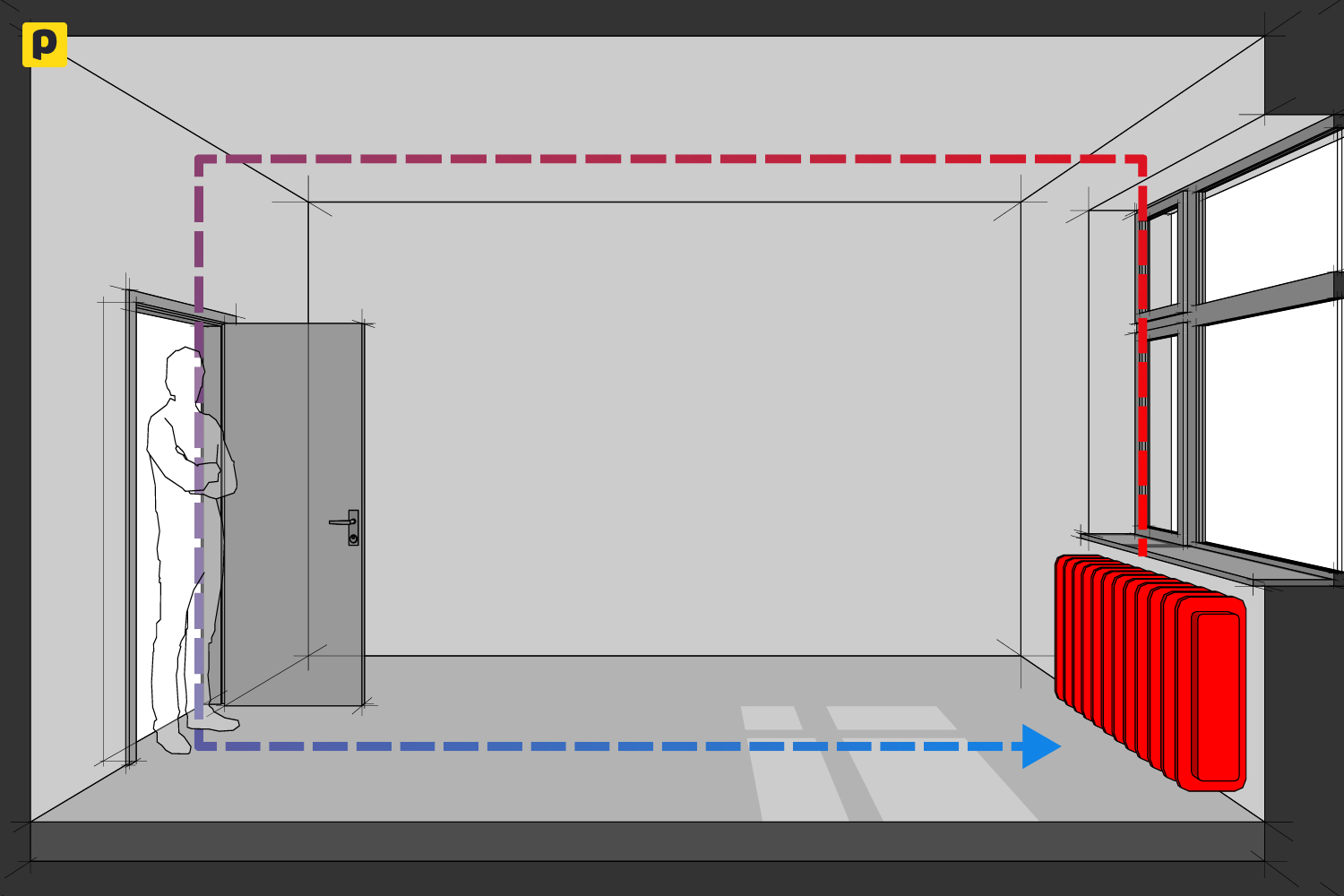
The diagram is a useful simplified picture of that movement, not a promise of a perfect curtain of warm air. The actual pattern changes with the room, radiator, window, furniture and coverings. For a fuller explanation of the emitter and water circuit, see How a Radiator Works - A Comprehensive Guide.
What modern glazing changes
Double or triple glazing and improved airtightness usually reduce cold-surface and downdraught effects. That allows more flexibility, particularly when a door, furniture layout or full-height window makes the traditional position awkward.
It does not prove that every modern window has negligible heat loss, or that an internal wall is automatically a better position. An under-window radiator can remain a sound choice when the space is open, the pipework is already suitable and the emitter can deliver the heat the room needs.
How to choose the best radiator position
Start with the room rather than a favourite wall. The placement and radiator specification need to work together.
- Use a room-by-room heat-loss calculation to establish the design heat requirement.
- Check the exact radiator's rated output after correction for the intended flow, return and room temperatures.
- Confirm the wall offers enough usable area, suitable fixing support and the manufacturer-required clearances.
- Allow for valves, controls, pipe or cable routes, maintenance access and sensible heat distribution.
- Check the finished furniture and window-covering layout, not just an empty room plan.
Output figures are only comparable when their temperature conditions are understood. BTUs and Delta Ratings in Radiators Explained - The Ultimate Guide covers that sizing distinction in more detail.
Furniture, curtains and controls
A radiator needs a clear path for air to enter low down and leave as it warms. Large furniture, a close-fitting cover or curtains draped across the emitter can obstruct convection and reduce direct radiant transfer into the room.
Window coverings can also redirect warm air towards the glass. If they surround a thermostatic radiator valve, they may affect the temperature that the valve senses. The result depends on the exact arrangement, so follow the radiator, valve and covering manufacturers' instructions instead of relying on a universal clearance or percentage penalty.
When a vertical radiator fits better
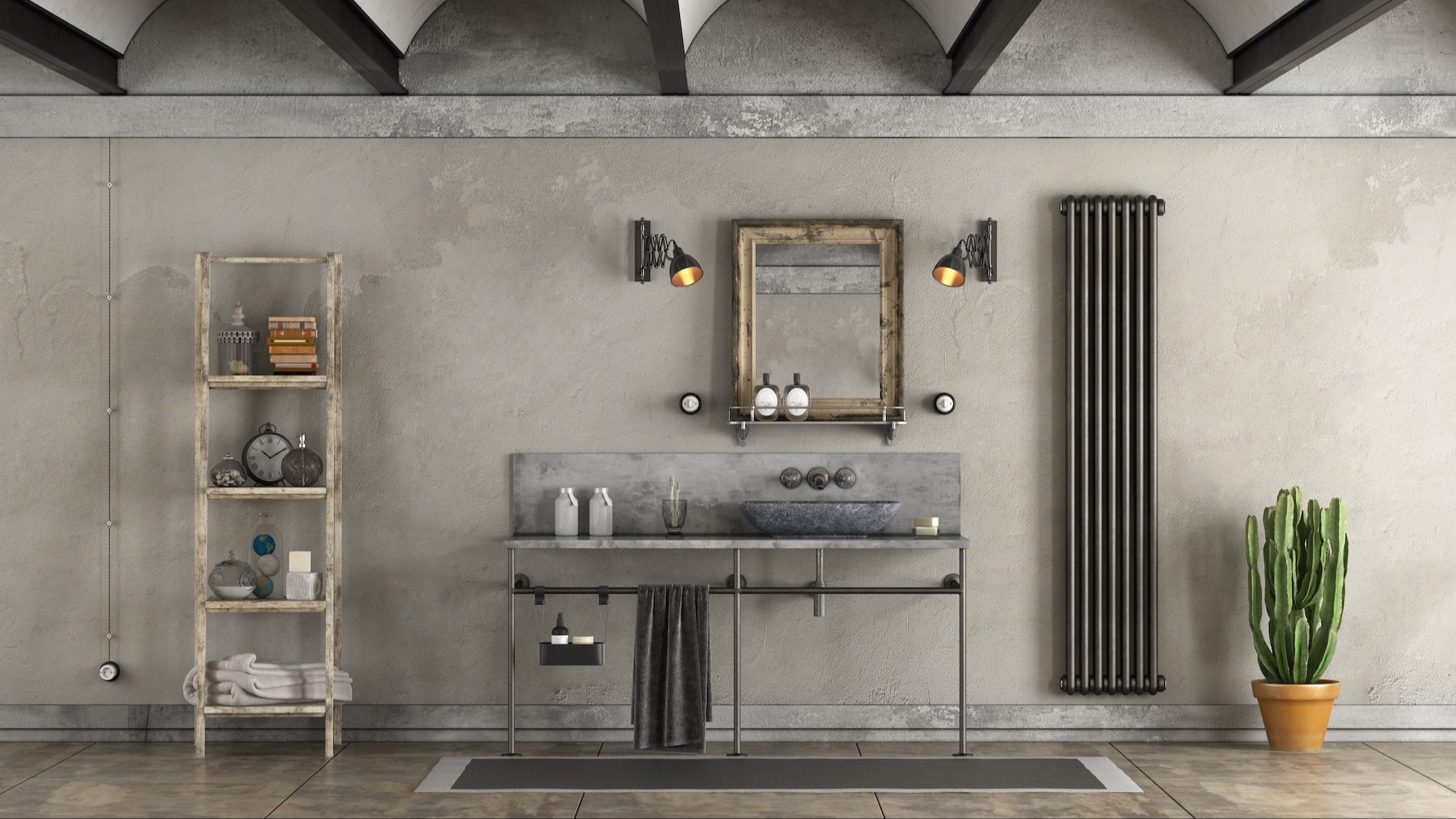
A vertical radiator can make useful heating space out of a narrow section of wall when windows, furniture or doors limit the width available at low level. It can also free a wider wall for the rest of the room layout.
Vertical does not automatically mean more or less efficient than horizontal. Compare the exact model's certified output at the relevant temperature condition with the room's calculated heat loss. The practical checks in Vertical Radiators: 7 Reasons Why They Are The Best Choice can help you assess a vertical option without relying on shape alone.
Underfloor heating is another possible system choice, but it is not automatically more efficient. Its suitability depends on the wider heating design, controls, construction and intended operating temperatures.
Before moving an existing radiator
Keeping the existing under-window position may be the sensible answer when the radiator meets the room load, the airflow is open and the pipework and controls are suitable. Moving it calls for more than choosing a different patch of wall.
A wet-system alteration can affect pipe routes, valves, system balance and finishes. The work needs safe isolation and draining, suitable inhibitor when the system is refilled, and checks for leaks and correct operation. A fixed electric radiator brings its own supply and installation requirements. Wall construction, fixings and the radiator manufacturer's instructions also need to be checked.
If sizing, pipework, electrical work or wall support is uncertain, ask a competent installer to assess the room and proposed position. That gives you a radiator layout based on heat demand and practical access, whether the final answer is beneath the window or elsewhere.