
In this guide
A vertical radiator can be a smart answer when wall width is tight or you want the heating to become part of the room's design. Its tall, narrow format can leave more continuous space for furniture and decoration while making useful use of an awkward wall.
That does not make every vertical radiator the best choice for every room. The right model still needs to meet the room's heat requirement, suit the heating system and fit the available space safely. These seven practical considerations will help you move from a good-looking idea to a sound specification.
1. Start with the room's heat requirement
Radiator shape comes after sizing. Begin with the room's design heat loss or required heat output, taking account of its dimensions, insulation, glazing, exposure and intended temperature. A tall radiator is not automatically more powerful than a horizontal one, and appearance alone cannot show whether it will heat the room properly.
A room-by-room heat-loss calculation gives you a defensible target for comparing suitable models. It also avoids relying on a generic rule that may not reflect your home. If you are replacing an existing emitter or planning a wider heating change, consider how the proposed radiator will work with the rest of the system rather than viewing it in isolation.
2. Make narrow wall space work harder
The clearest practical advantage of a vertical radiator is its reduced horizontal footprint. A suitable model may fit on a narrow section of wall where a conventional horizontal radiator would compete with a door, sofa, cabinet or other furniture. That can make the room easier to arrange without sacrificing a required heat output that the selected model is proven to provide.
Check the actual height, width and projection of the radiator rather than relying on the word “vertical”. Look at door swings, curtains, furniture and the space needed for air to move around the emitter. A tall radiator can make a wall composition feel more deliberate, but any impression that the room is larger is a visual effect, not a physical change.
3. Compare wet-system output on the right basis
For a wet central-heating radiator, compare the declared output with the room requirement at the temperature difference that applies to the intended system. This difference is commonly described as Delta T and is based on the relationship between the system's flow and return temperatures and the room temperature.
Outputs stated at different Delta T values are not directly comparable without a valid conversion or manufacturer data. A figure quoted for one temperature basis may not represent what the same radiator will deliver on another. Our guide to BTUs and Delta ratings in radiators explains how to make a like-for-like comparison.
Also check the connection centres, pipe route, valve arrangement and compatibility with the existing system. These details can affect whether a radiator fits the intended position and whether altering the pipework will be necessary.
4. Treat electric models as a separate choice
An electric vertical radiator is selected using its declared wattage and the manufacturer's electrical, control and siting requirements. Hydronic Delta T adjustment does not apply to an electric model, so keep the two output methods separate when comparing options.
Neither system type is automatically the cheaper, greener or more efficient answer for every home. The sensible choice depends on the room heat requirement, existing infrastructure, controls, installation scope and how the room will be used. See electric vs traditional radiators for a fuller comparison of the two arrangements.
Check the product instructions before choosing a position. New circuits, fixed wiring or bathroom siting should be assessed and completed by a competent electrician where required.
5. Plan mounting, clearances and access
A tall radiator needs a suitable wall and a planned installation route. Confirm the wall construction and check the product's relevant dry and filled weight. Use the brackets and fixings specified by the manufacturer for that product and wall type rather than assuming one fixing approach suits every installation.
Keep the manufacturer's required clearances around the radiator and preserve access to valves, bleed points, controls and future servicing. Check the pipe or cable route before purchase, along with the radiator's projection into the room. These practical details are especially important near doorways, curtains and furniture.
Radiator surfaces can become hot in use, so do not treat the emitter as something to lean against or touch for comfort. Positioning a new radiator or altering heating or electrical services is work for a competent installer.
6. Use height as a deliberate design feature
A vertical radiator can occupy an otherwise awkward tall wall and become a clear focal point. Its upright lines may complement high ceilings or draw the eye upwards, although that sense of added height remains subjective. In an open layout, its placement may also help to define a visual zone.
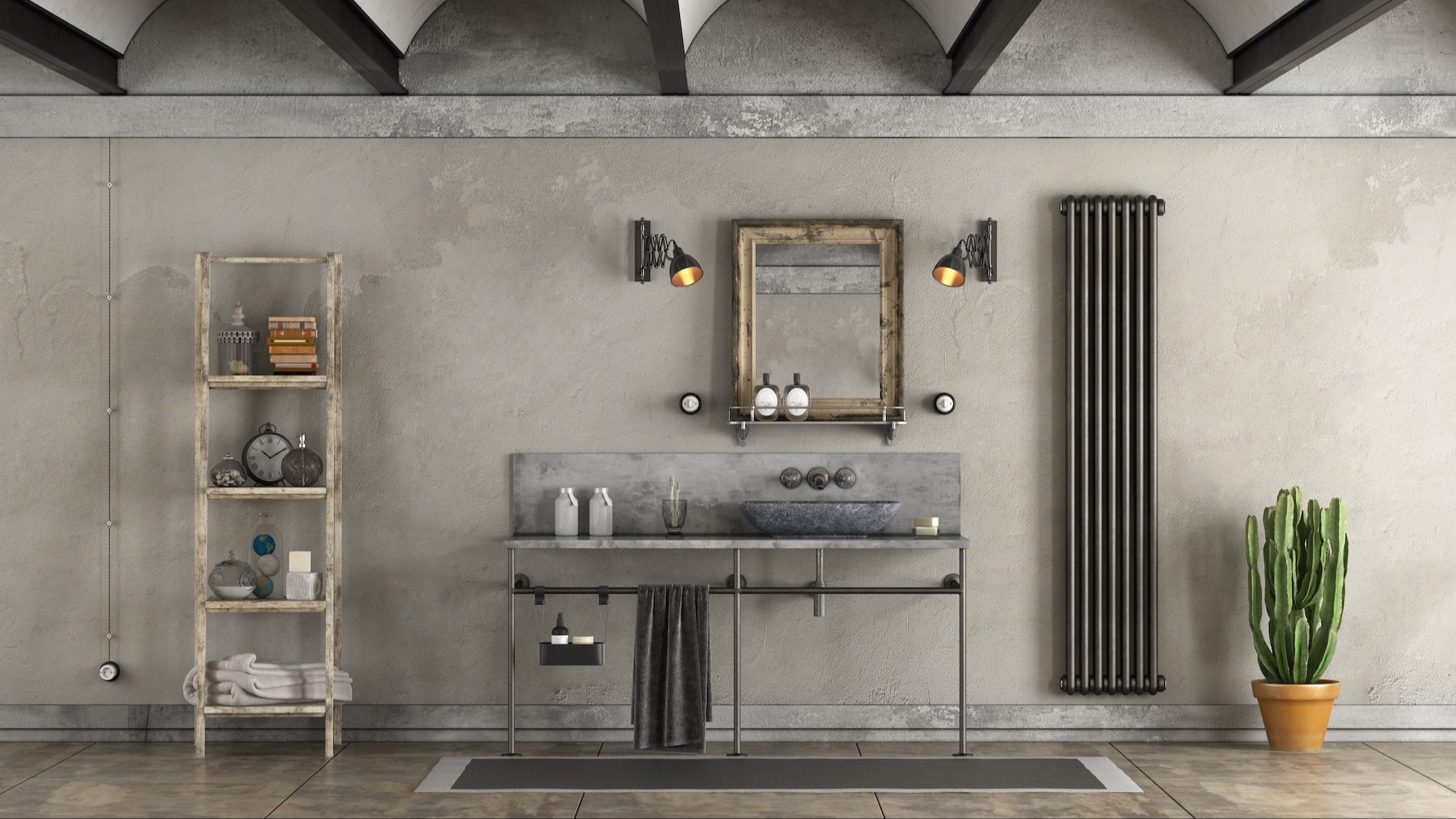
A standard wall-mounted radiator is not a freestanding or structural room divider. If a design depends on a more unusual position or mounting arrangement, verify that the exact product and installation design support it before proceeding.
7. Choose style after the specification works
Vertical radiators are available in different forms, including traditional column looks and flatter contemporary profiles. Colours and finishes can help the radiator blend into the wall or stand out as a feature. Confirm the exact options and finish details for the product you are considering rather than assuming every style is available in every size or output.
Before buying, check:
- the room's design heat loss or required output;
- the declared output basis, using Delta T for wet models or wattage for electric models;
- the radiator's height, width and projection;
- the heating system, connections, valves, pipe route or electrical supply;
- the wall construction, relevant radiator weight, brackets and fixings;
- the manufacturer's clearances and access for controls, bleeding and servicing; and
- the installation route and any work that needs a competent installer.
Once those checks are complete, you can choose the format and finish with confidence. For a broader sizing and selection overview, continue with Which Radiator Do I Need?