
In this guide
A well-positioned radiator shelf can make a room feel more considered and give you a modest display surface in otherwise unused wall space. It can be a practical finishing touch, provided it is securely fixed, leaves the radiator able to work as intended and follows the instructions for both the radiator and the shelf. It should not be treated as a way to increase efficiency or cut heating bills.
Are radiator shelves a good idea?
They can be, but the answer depends on the radiator, the shelf and the room. A radiator shelf is a separate horizontal surface fixed above the radiator. It is not the same as a cabinet-style cover that surrounds more of the emitter.
A suitable shelf can soften the radiator’s visual impact and provide a small area for carefully chosen decorative items. It becomes a poor choice if it obstructs airflow, blocks access to controls or maintenance points, conflicts with the manufacturer’s clearance instructions, or places unsuitable objects in repeated warmth.
There is no single clearance that is right for every radiator and shelf. Check the instructions for both before deciding on the position. If the instructions are missing, unclear or contradictory, seek competent advice rather than improvising.
How a shelf affects heat flow
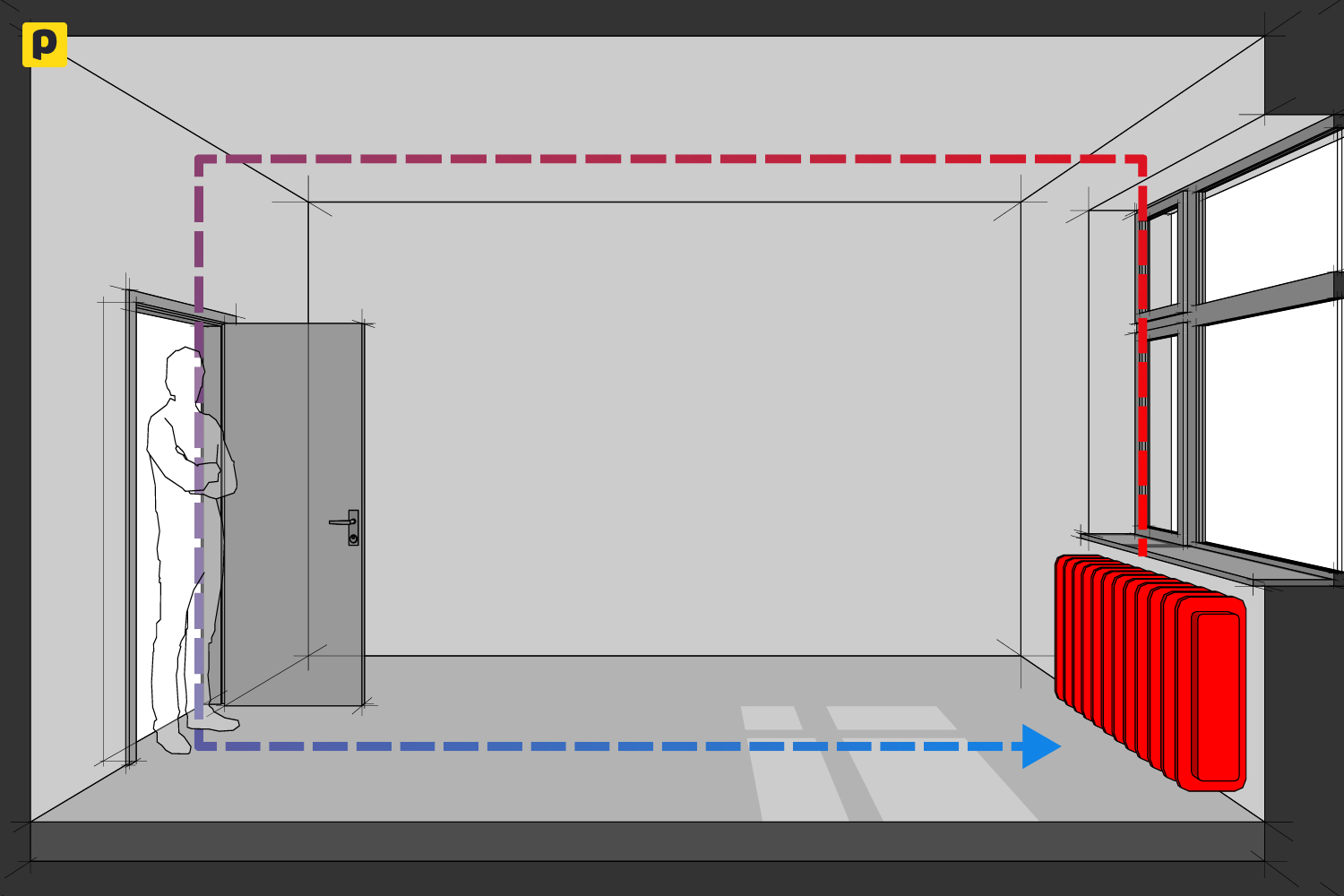
Most domestic radiators warm a room through a combination of convection and radiation. Warm air rises from around the radiator as part of a natural circulation pattern, while the warm radiator surface also transfers heat directly to its surroundings.
A shelf above the radiator intercepts some of that rising air. Depending on its position and depth, it may direct part of the warm-air plume forwards into the room. If the shelf is too close, too deep or otherwise obstructive, it may restrict circulation instead. The result depends on the radiator design, shelf geometry and room conditions, so redirected airflow is not evidence of greater heat output, improved efficiency or lower energy use.
For more detail on the basic heating process, read How a Radiator Works - A Comprehensive Guide.
Practical advantages of a radiator shelf
- A neater focal point: a shelf can help the radiator sit more comfortably within the room scheme and provide a deliberate visual line above it.
- A modest display surface: it can make use of wall space that might otherwise remain empty, as long as the fixings and intended load are suitable.
- A possible change in airflow direction: the shelf may guide some rising warm air forwards, although the effect varies and should not be treated as a performance upgrade.
Keep the surface lightly and sensibly used. Any object placed there should tolerate repeated warmth and remain stable. Products marked to stay away from heat, candles, aerosols, medicines, electronics, spillable liquids, and heavy or unstable objects are better kept elsewhere.
Drawbacks and warning signs
The main drawback is the possibility of restricting convection. A shelf that crowds the radiator top or obstructs an air outlet can change how freely warm air circulates. This matters particularly where the room already feels only just warm enough or where the radiator has openings at the top.
Heat can also affect the shelf, its finish and anything placed on it. Timber may warp, cup, dry or discolour over time. Paints, laminates, adhesives, metals and composite materials still need to be suitable for the temperatures they may experience.
A shelf should not make routine access awkward. Leave room to reach bleed points, valves, thermostatic heads and other controls, and allow for cleaning around the radiator. Overloaded shelving, unsuitable wall fixings or a fixing position that risks concealed pipes or cables are reasons to stop and reassess the plan.
Clearance, shelf size and access
Start with the radiator manufacturer’s instructions, then check the shelf manufacturer’s installation and clearance requirements. Preserve the stated space around air inlets, outlets, controls and the top of the radiator. Do not substitute a general rule of thumb for the requirements that apply to the actual products.
Shelf depth matters as well as height. Consider how far it projects, whether curtains or a window board affect the space, and whether you can still reach the radiator for operation, bleeding and cleaning. Electric and storage heaters can have stricter rules, so their air paths and controls must not be obstructed.
If the proposed position clashes with either set of instructions, choose a different arrangement. When the correct clearance cannot be confirmed, competent advice is the sensible next step.
Materials, fixings and shelf contents
No shelf material should be assumed to be unaffected by heat. Timber can move or change appearance, and treating it does not guarantee that it will remain stable indefinitely. Coatings, laminates and adhesives also need to suit the conditions in which the shelf will be used.
The brackets and fixings must suit the wall construction and the intended load. Before drilling, account for the possibility of concealed pipework or cables. If you are uncertain about the wall, the fixing position, the heater clearance or nearby services, ask a competent installer to assess the arrangement.
Once fitted, use the shelf as a modest decorative surface rather than general storage. Keep the load within the shelf and fixing instructions, and choose only stable objects that are suitable for repeated warmth.
Radiator shelf versus radiator cover
A shelf and a cover are not interchangeable. A shelf sits above the radiator, while a cabinet-style cover surrounds more of it. Because a cover can affect access and airflow differently, a conclusion about one should not be applied automatically to the other.
If you are comparing the two approaches, see Are Radiator Covers a Good Idea? for the separate considerations that apply to covers.
A practical decision checklist
- Identify the radiator type, especially whether it is a wet central-heating radiator, electric heater or storage heater.
- Read the radiator and shelf manufacturers’ instructions.
- Confirm that the proposed position preserves required clearance and airflow.
- Check that valves, bleed points, controls and cleaning areas remain accessible.
- Consider shelf depth, curtains, a nearby window board and any top air outlets.
- Match the shelf material, brackets, wall fixings and load to the intended use.
- Keep heat-sensitive, unstable, heavy, pressurised, electrical, medicinal and spillable items elsewhere.
- After installation, observe whether the room still feels comfortably heated and stop using the arrangement if a problem becomes apparent.
- Seek competent advice if the instructions, wall fixings, concealed services or clearances are uncertain.
If the shelf question is part of a wider radiator decision, Which Radiator Do I Need? A Comprehensive Guide covers the broader selection factors. For a wider product-discovery next step, you can also browse the Heating collection.