
In this guide
Choosing a suitable fitting becomes much easier once you separate two questions: what shape or component does the pipework need, and how should the joint be made? Copper and brass can both be excellent choices, but neither is best for every job. The answer comes from the pipe material, intended service, working conditions and the exact product and pipe-system instructions.
Brass or copper: the short answer
Copper and brass can both provide useful fitting shapes and components, but the metal does not, by itself, tell you how the joint is made. Copper is widely used for elbows, tees, couplings and reducers. Brass can be made into many of the same shapes, as well as threaded adaptors and more detailed components such as valve bodies. Compare the fitting's form, connection method and documented limits as separate parts of the decision.
Copper fittings at a glance
- Common shapes: Copper fittings are commonly made as elbows, tees, couplings and reducers.
- Joint methods: They are available for end-feed, solder-ring, press and compatible push-fit systems.
- Useful role: They often suit copper pipework when the exact fitting and pipe-system instructions confirm the combination.
- Checks: Confirm the pipe size, intended service, joint method, approvals, and pressure and temperature limits.
Brass fittings at a glance
- Common shapes and components: Brass products include couplings, elbows, tees, threaded adaptors and valve or connector bodies.
- Joint methods: Compression and threaded joints are common, although brass components also appear in other connection systems.
- Useful role: Brass often suits compression joints, threaded transitions and components that need a more detailed shape.
- Checks: Confirm pipe compatibility, the exact alloy or any DZR requirement, service approval and product limits.
These are common patterns rather than universal rules. Product markings and the instructions for the exact fitting and pipe system take priority over any broad comparison of the two metals.
Start with the copper fitting you need
When people talk about copper fitting families, they may mean the component's shape, such as an elbow, tee, coupling or reducer, or the connection system used to join it. Keeping those ideas separate avoids a great deal of confusion. A press tee and an end-feed tee perform a similar branching role, for example, but they make their joints in different ways.
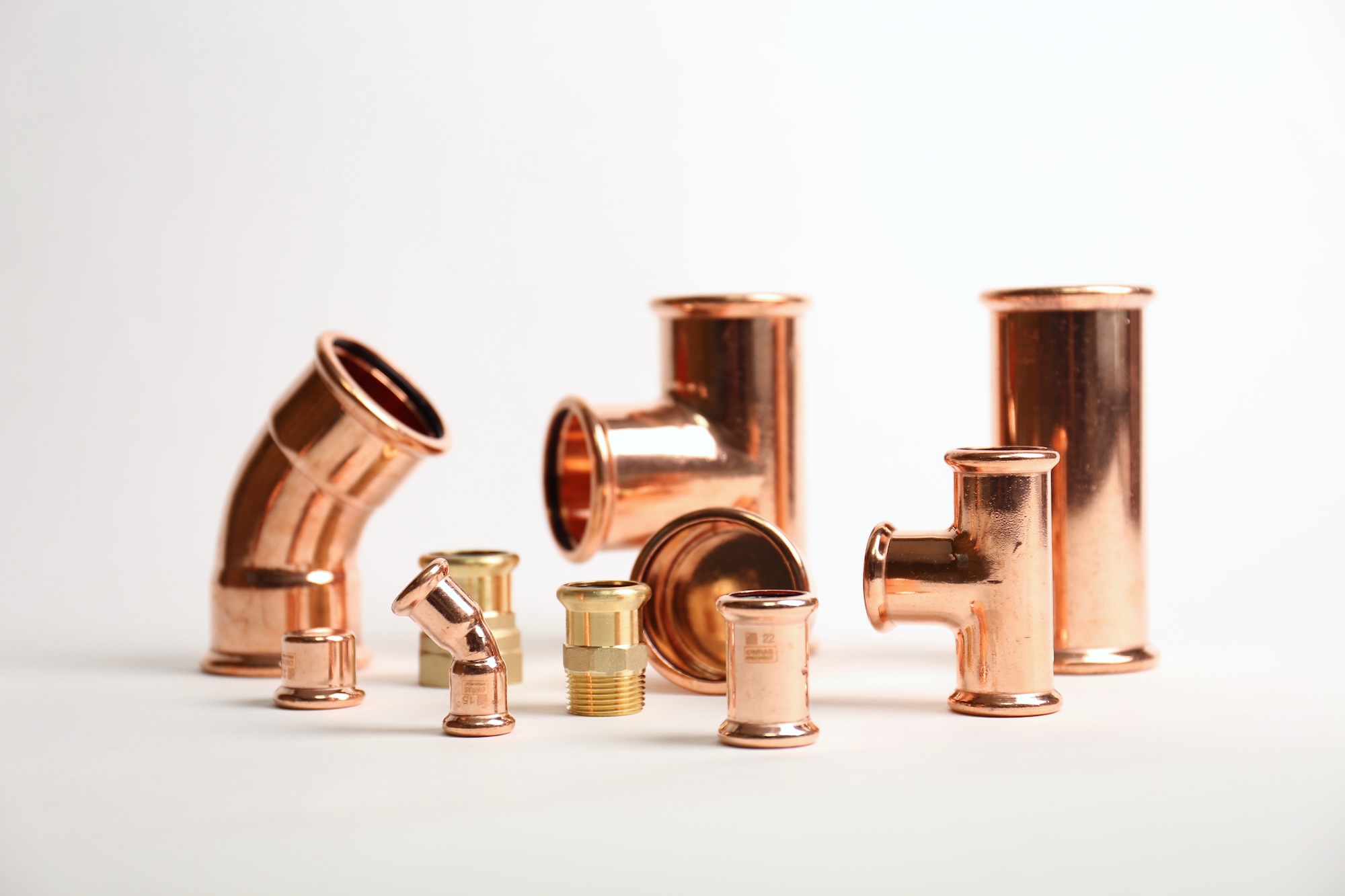
Copper fittings are frequently paired with copper pipe, but the shared material does not make every combination suitable. End-feed and solder-ring products belong to capillary jointing systems. Press fittings are designed for the specified pressing system, while compatible push-fit fittings use their own gripping and sealing parts. Each product still needs to match the named pipe, size and intended service.
The Copper Pipe Fittings collection provides a broad view of the available shapes. You can also look more closely at Solder Ring Fittings and Copper Press Pipe Fittings. Use those collections to narrow the type of fitting, then check the individual product information before making a final choice.
Understand the brass component
Brass is an alloy of copper and zinc. It can be formed or machined into detailed components, so it is common in couplings, elbows, tees, threaded adaptors and valve or connector bodies. Those descriptions tell you about the component's form or purpose. They do not, by themselves, tell you how it connects to the pipework.
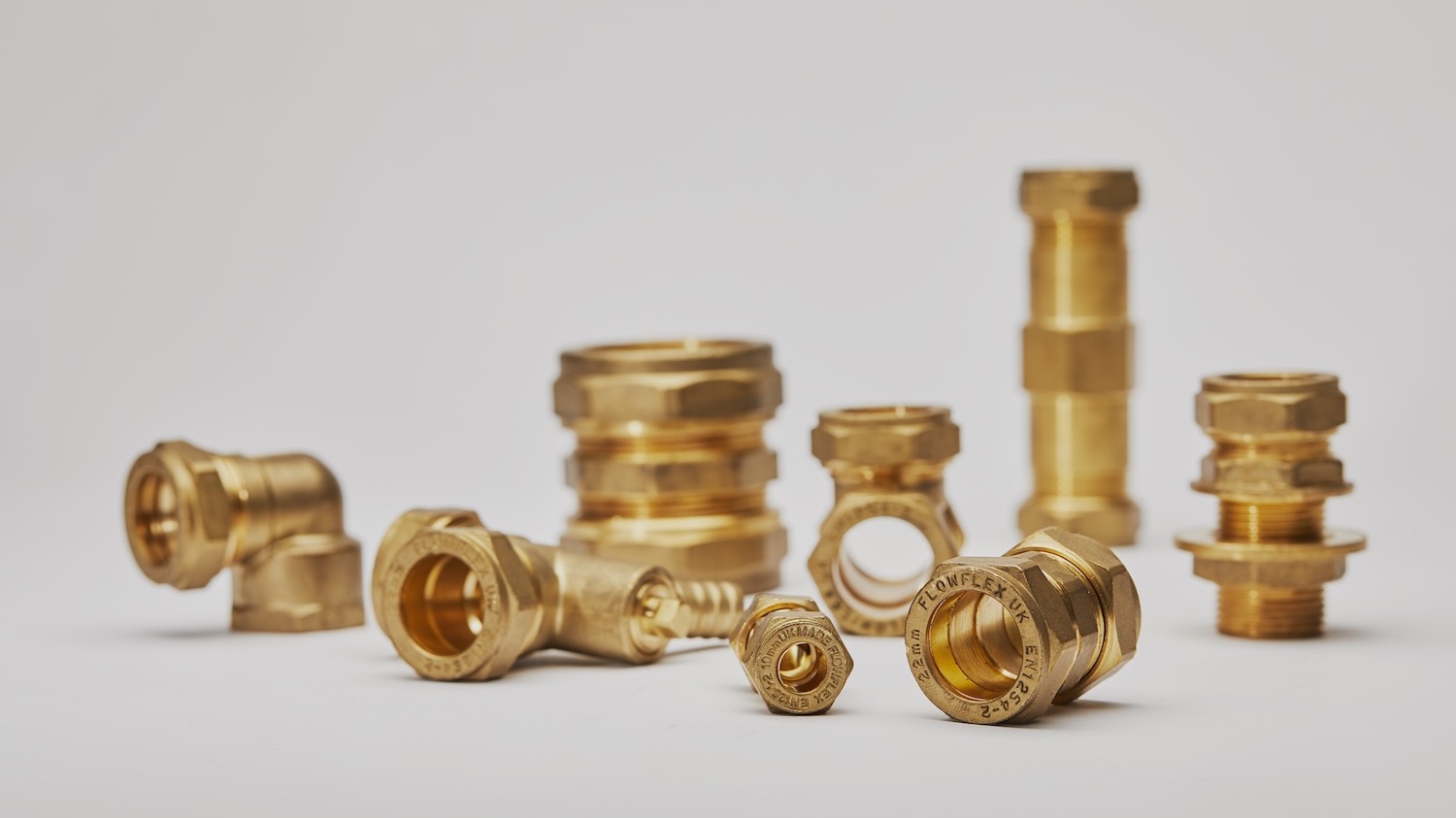
Compression is one common joint method used with brass fittings. A typical compression connection uses a nut and olive around compatible pipe. Brass adaptors may instead use threaded connections to join suitable threaded components or provide a transition. In both cases, the fitting maker's instructions and the named pipe-system instructions must support the proposed combination, including any olive, insert, support or sealing arrangement.
The Compression Fittings collection is a useful way to compare that connection type. Individual products can differ in pipe compatibility, service and limits, so check each fitting on its own merits.
Compare jointing methods separately
Once you know the shape or component you need, consider how the joint will be made. This affects the tools and competence required, whether heat is involved, the space needed around the pipe and how easy the connection will be to inspect or maintain later.
End-feed capillary joints
In an end-feed capillary system, the copper pipe sits closely inside the fitting socket, and separately applied solder forms the joint between them. The method needs suitable heating equipment, enough room to manage heat and flame safely, and the competence to prepare and inspect the connection correctly. It is not normally selected where routine dismantling is expected.
Solder-ring capillary joints
A solder-ring fitting contains a ring of solder within the socket. It still relies on the specified capillary system and requires heating equipment, competent preparation and safe access around the work area. The contained solder does not remove the need to inspect the completed joint, and this connection is not generally intended for routine demounting.
Press connections
A press fitting is compressed using the tool and jaw profile specified for that system. The installer needs the correct equipment and enough space to position it around the fitting. Any sealing element and the finished connection also need the checks required by the manufacturer. Press joints are usually chosen as permanent connections rather than for regular dismantling.
Compatible push-fit systems
A push-fit fitting uses built-in gripping and sealing parts, so it does not require soldering or a flame. The exact pipe compatibility, preparation requirements and any supporting insert come from the product and pipe-system instructions. Some systems include a demounting feature and others do not, so future access and maintenance should be checked before choosing.
Compression joints
A compression fitting normally uses a nut and olive to grip compatible pipe. It needs suitable hand tools and enough access to work on and inspect the connection, but it does not introduce a flame. A compression joint may be useful where future maintenance matters, although whether it can be disconnected or any parts can be reused depends on the exact manufacturer's instructions.
Threaded connections
Threaded adaptors connect suitable threaded components or form part of an approved transition. The thread form, sealing arrangement, tools and service limits are product-specific. A threaded connection can offer useful maintenance access when it is designed for that purpose, but enough room must remain to inspect and work on it safely.
None of these descriptions is an installation guide. Products from different ranges or manufacturers are compatible only when the exact product and pipe-system instructions confirm the proposed combination for the intended service.
Match the fitting to the pipe
Copper pipe
Copper pipe may work with copper capillary, press or push-fit fittings, as well as brass compression fittings and adaptors. Compatibility is not guaranteed simply because the materials look familiar. Check the exact fitting instructions alongside the pipe-system instructions for the pipe size, joint method and intended service.
Plastic pipe
Plastic pipe needs a fitting that its named pipe system supports. An insert or stiffener is often required to support the pipe at the joint, but the relevant manufacturers determine the correct component and method. Push-fit is one possible option rather than the only route, and general advice cannot replace the instructions for the exact products.
Steel and other mixed metals
A connection between steel, copper, brass or another metal needs a suitable transition and a competent assessment of the wider system. Galvanic-corrosion risk depends on the metals involved, the conductive fluid and the way the system is designed. Brass conducts electricity, so it is not a universal insulating barrier between copper and steel.
Think about durability, water and corrosion
Both copper and brass fittings can give long service when the products are suitable for the job and the connections are made correctly. Neither metal is corrosion-proof, and you cannot decide which will last longer without knowing the exact products and conditions.
Copper can be affected by water chemistry, flow conditions, residues and workmanship. Some brass alloys can be affected by dezincification, where zinc is lost from the alloy under certain conditions. DZR brass, or another specified approval, may be required for a particular water supply or application. Do not rely on a fitting's colour or appearance to decide whether it meets that requirement.
Copper grade, brass alloy, local water conditions, temperature, flow, installation quality and product approval all influence the likely service life. These general factors help you ask the right questions, but they cannot diagnose an existing plumbing system or guarantee an outcome for a particular property.
Check service ratings and approvals
The metal alone does not tell you whether a fitting is suitable for drinking water, heating, gas, a particular pressure or a particular temperature. Check the markings and documentation for the exact pipe and fitting, together with the compatibility information, service approvals and stated limits.
For drinking-water pipework, confirm the relevant approval and any requirement linked to local water conditions. For heating, check the temperature and pressure limits for the complete proposed combination. Gas fittings and jointing methods must be authorised for that precise service, and the work should be handled by an appropriately qualified registered professional.
Hidden pipework, invasive alterations, mixed metals and uncertain compatibility all deserve extra care. If the exact product information does not clearly support the proposed connection, pause and ask a competent professional to assess it.
Keep the environmental comparison in proportion
Copper and brass can both be recycled. When old fittings are removed, they should be kept out of general waste and sent through a suitable metal-recycling route. That is worthwhile, but it does not prove that one material has a lower whole-life environmental impact than the other.
Recycled content varies between products and manufacturers. Unless the individual product information provides the evidence, avoid quoting a percentage or calling either option inherently greener. A fitting that is properly specified, performs its intended role and can be maintained appropriately remains the practical priority.
Choose in a sensible order
Work through the decision in stages so that cost and convenience do not overtake compatibility and safety:
- Define what the pipework will carry and any requirements that apply to that service.
- Identify the pipe material and exact size.
- Choose the required component shape or function, such as an elbow, tee, coupling, reducer, adaptor or valve body.
- Choose a joint method that suits the job, available tools and level of competence.
- Confirm the proposed fitting and pipe combination in the exact product and pipe-system instructions.
- Consider heat or flame risk and the space available around the connection.
- Allow for inspection, future access, demountability and maintenance where they matter.
- Verify pressure and temperature ratings for the complete proposed combination.
- Check drinking-water or gas approval where relevant.
- Consider local water conditions and any mixed-metal risks.
- Compare whole-job cost after the suitable choices are clear.
Copper may suit a copper-pipe installation using a compatible capillary or press connection. Brass may suit a compatible compression joint, threaded transition, adaptor or valve component. The better choice is the one supported by the exact system information and the needs of the job.
For more help with the copper side of the decision, read Choosing the Best Copper Pipe Fittings for Your Project. Once you have confirmed the pipe, service, fitting shape and connection method, the Plumbing Fittings collection is a practical place to compare the relevant options.