
In this guide
Compression fittings provide a practical mechanical way to join pipework, especially where soldering is not the right option for the job. They are widely used by professional plumbers in domestic and commercial work, but dependable results still begin with the same basic decision: the fitting, pipe, service and installation method must all be compatible.
That means there is no single “best” compression fitting or universal tightening rule. A useful choice comes from checking the exact application, following the product instructions and understanding how the joint is intended to seal.
Where compression fittings make sense
A compression fitting is an established connection method rather than a makeshift alternative. It can be useful in repairs and installations where soldering is impractical, and it is used by professionals as well as competent DIYers. If you want a fuller introduction to the components and their purpose, start with What are Compression Fittings?.
Copper pipe can be compatible with compression fittings, but “copper” alone is not enough to confirm the choice. The fitting must be expressly suitable for the pipe size, the material being connected and the intended service. The same principle applies to every other pipe material: check the complete combination rather than assuming that a familiar fitting will suit any job.
How the joint forms its seal
A typical compression joint brings together the fitting body, nut and olive around the pipe. As the connection is assembled and tightened correctly, the olive acts on the pipe to form the joint. The components must be compatible, correctly positioned and free from damage if they are to work as intended.
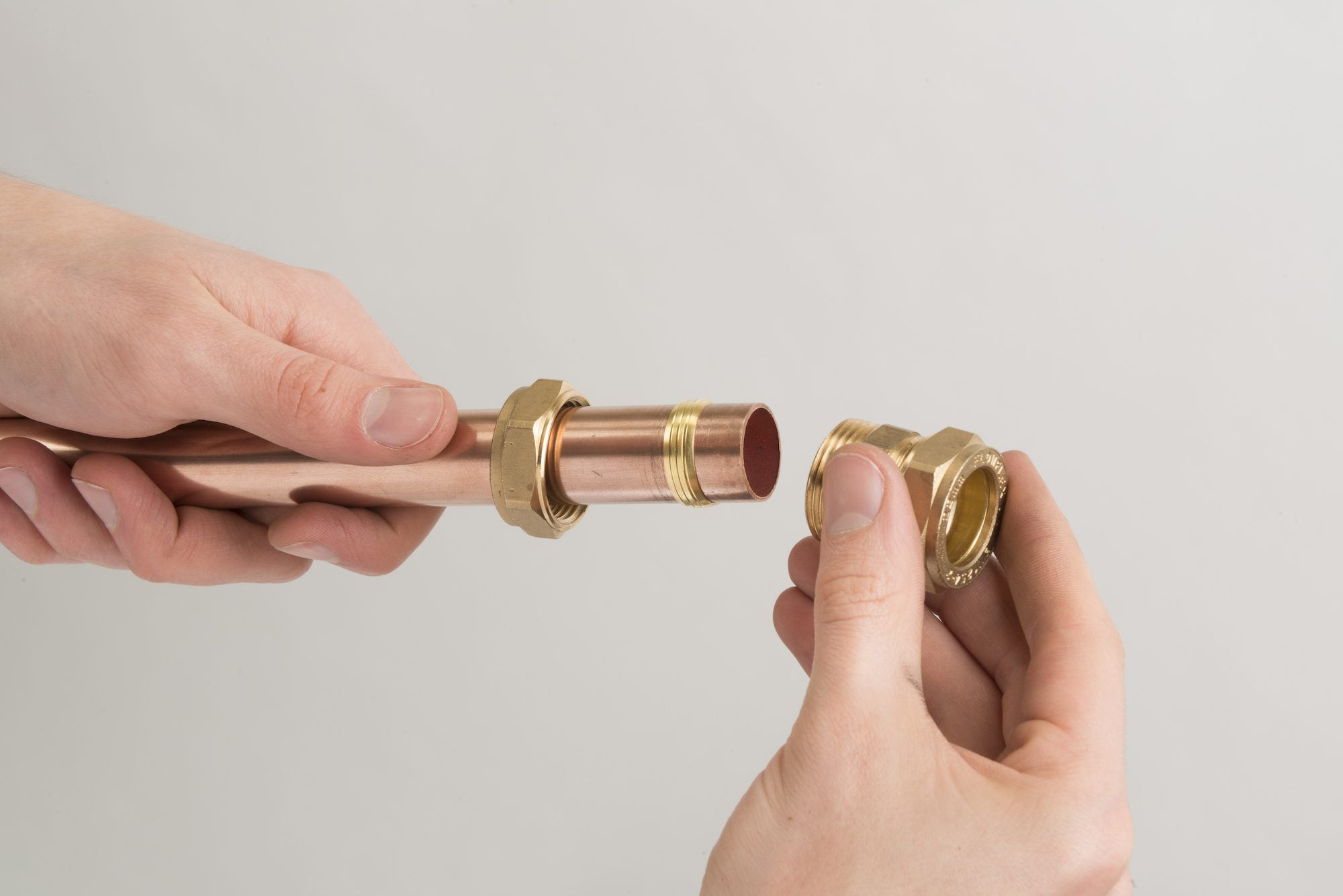
PTFE tape and jointing compound are not normally what creates the seal at the compression interface. Adding either as an automatic extra precaution can hide the more important question of whether the parts have been selected and assembled correctly. If a particular product requires or permits an additional sealing material, follow that fitting manufacturer’s current instructions rather than relying on a general habit.
Prepare the pipe and tighten with control
Compression joints can fail, just like other fittings. Common causes include incompatible or damaged parts, pipe cut to the wrong length, a pipe end that is not square, incomplete insertion, under-tightening and over-tightening. Each can prevent the components from forming the intended joint.
- Confirm the fitting matches the pipe size, material and intended service.
- Check that the pipe and fitting components are undamaged.
- Prepare the pipe to the length and square finish required by the product instructions.
- Insert and assemble the parts in the correct order and position.
- Use the manufacturer’s stated tightening method rather than an assumed number of turns.
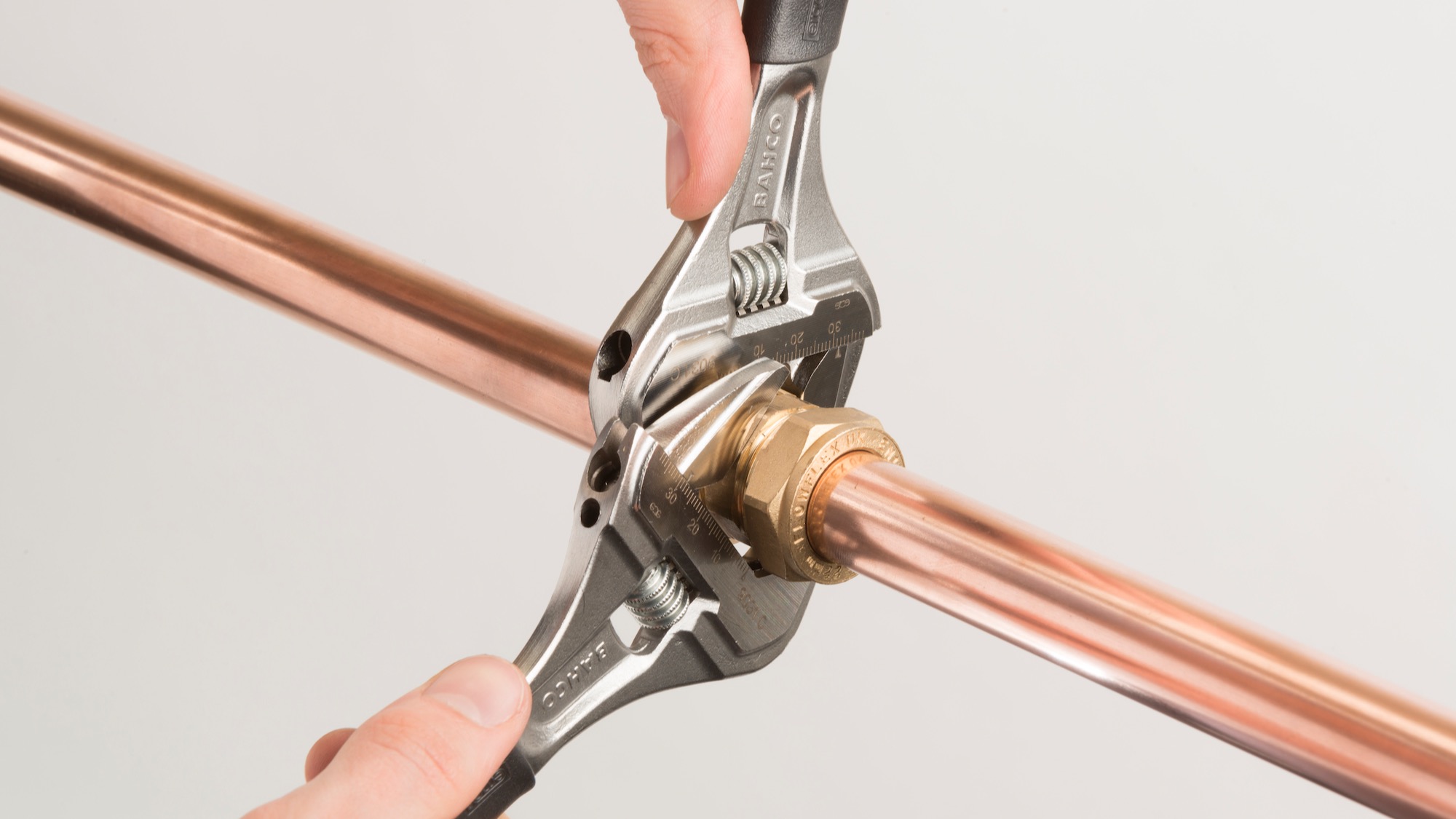
Under-tightening may leave the joint short of the compression needed to seal. Over-tightening can deform the pipe or damage the fitting, which can also contribute to a leak. You may hear “snug plus a quarter turn” offered as a rule of thumb, but it is not a universal instruction or a substitute for the specified method for the exact fitting.
For a broader planning guide, see How To Install Compression Fittings. If a joint leaks or the condition of any component is doubtful, do not assume that simply tightening it further will solve the problem. Recheck the product instructions and obtain competent help where needed.
Choose the material for the service
Material is one part of the decision, not a complete answer. Brass compression fittings are common, stainless-steel fittings can appear in industrial applications, and plastic fittings are lightweight. Those broad descriptions do not establish the pressure, temperature, corrosion resistance or service compatibility of a particular product.
The best option is therefore the one supported for the pipe, medium, environment and operating conditions in front of you. Types of Compression Fittings Explained can help you understand the available configurations, but the current technical information for the exact product remains the deciding evidence.
The same qualification applies to questions about brass reliability. A suitable brass fitting can provide a dependable connection when it is installed correctly, but the word “brass” is not a guarantee against a poor match, damaged component or incorrect installation.
Check pressure ratings and standards properly
There is no single safe working pressure for all brass compression fittings. The answer depends on the exact manufacturer and fitting, the connected pipe, the conveyed service, the operating temperature and the conditions of use.
A reference to BS EN 1254 does not, by itself, provide a universal pressure rating, nor should it be taken as proof that every compression fitting is covered in the same way. Use the current technical data supplied for the exact product. Where the service is safety-critical or the information does not resolve the application, ask an appropriately competent person to assess it.
Understand stop ends and safety boundaries
A compression stop end is a fitting used to close the end of a pipe. Whether that closure may be temporary or permanent, and whether it is suitable for water, gas or another service, depends on the exact stop end and the requirements of the system.
Do not infer gas suitability from the fitting type alone. Gas pipework must be assessed and worked on by an appropriately competent person using components approved for that exact application.
Make a careful decision about re-use and disposal
A compression fitting should not be treated as automatically reusable simply because the olive can be replaced. Re-use depends on the manufacturer’s guidance and the condition and compatibility of the fitting body, nut, pipe and sealing components. Damage, distortion, wear or uncertainty about the parts is a reason to stop and assess the joint rather than assume it can go back into service.
Brass can be recyclable, but “100% recyclable” is too broad as a promise for every used fitting. Product composition, contamination and the facilities available locally can affect the disposal route. Recycled content also varies and should not be assumed without product evidence.
Make the next choice with confidence
Before selecting or working with a compression fitting, use a short decision sequence:
- Identify the pipe material, size and the service it will carry.
- Choose a fitting expressly compatible with those requirements.
- Read the current pressure, temperature and installation information for that product.
- Prepare, assemble and tighten only as directed.
- Inspect the components and joint for damage or leakage.
- Bring in competent help when the application or condition is uncertain.
You can continue with Best Practices in Compression Fittings for a practical overview of selection and preparation. When you are ready to compare suitable options, explore the Compression Fittings range and check each product against the needs of your job.